Showing posts with label justin hill. Show all posts

Monday, 17 October 2016

REVIEW: Viking Fire by Justin Hill

Viking FireViking Fire by Justin Hill
My rating: 5 of 5 stars

Justin Hill is a terrific writer. His prose oozes poetry and a real sense of the time and place of his novels. In Harald Hardrada's saga, Viking Fire, Hill gives us a flawed and likable character, told in the Norwegian warrior-king's own words (as recounted to a priest in Britain before his death). This is the second of Hill's novels set during the build up of the Battle of Hastings. The first is Shieldwall, which is told from multiple viewpoints in third person. In Viking Fire, Hill has decided to tell the story from the perspective of the protagonist, which lends it an added immediacy and intimacy.

The first half of Viking Fire, that focuses on Harald's youth and his formative years, is the highlight of the book for me. The great warrior's character leaps from the page and Hill manages to make him deep and wholly believable. If there was one thing that disappointed me about Viking Fire, it is that it glosses over years of campaigns and exciting adventures when Harald was building up his power and great wealth in the service of the Emperors and Empresses of Constantinople. There are several wonderful chapters set during this period, but I couldn't help feeling there were dozens of stories hinted at, but not shown. I would have happily read more of Harald's escapades.

It is a real pity that the historical note was omitted from the hardback version I read. I recommend anyone who reads Viking Fire book to check it out on Justin Hill's website: http://justinhillauthor.blogspot.co.u... It really added a lot for me to see why Hill had taken some of the decisions, and focused on some things more than others.

I loved Justin Hill's first 11th century novel, Shieldwall, and had been awaiting the sequel for years. Viking Fire was worth the wait. Hill brings to life the icy vastness of Nordic mountain ranges and fjords, the freezing, often deadly wastes of the Baltic, the bejeweled and heady riches of Constantinople, the ancient temples of the Holy Land, and the savage intrigues, alliances and huge battles of great nations, all in the life-saga of one truly magnificent man. A man whose name Justin Hill will not allow to be forgotten: Harald Sigurdson, known as Hardrada, King of the North, the Last Viking.

View all my reviews

Sunday, 25 September 2016

Autumn newsletter - now you know what I did last summer!


It's been a busy summer!

Well summer is at a close, and despite the unseasonable heat here in the south west of England, the days are growing noticeably shorter and soon the land will be cloaked in autumn mists. I haven't sent out a newsletter for a while and when I do, they tend to just be announcing releases. So I thought this time I would give you a quick update of what I've been doing over the summer and what you can expect from me in the next few months. In other words, a proper newsletter!

During the summer, my first two books, The Serpent Sword and The Cross and the Curse, were published by Aria. They are both doing really well, and at the time of writing, they are at positions one and two respectively in the UK Amazon's Historical Thriller category. They are also both reduced to 99p at the moment in the UK, so snap them up if you haven't already bought them. It looks like they are cheap in other countries too, but it is hard to keep track, and the prices change all the time.


Book three of The Bernicia Chronicles, Blood and Blade, has now been edited and its cover is done. There are just a few last tweaks to things like the map inside and it will be ready to go. The few people who have read advance copies have raved about it, so I hope you'll like it too. You can pre-order it now.

I have also been working hard on book four, which I am tentatively calling, Killer of Kings. I set myself a schedule at the beginning of the year and I am well on track to finish the first draft ahead of my target. I wasn't able to write as much as usual over August, as I had some holiday time with my family and I promised myself (and them!) I would not work while we were away.


We went to Lake Garda in Italy and visited Venice and Verona too, as well as the small towns around the lake. I have visited Italy a few times before and I love it there. I have to admit to feeling the murmurings of the muse during this recent holiday as we walked, so perhaps there will be some novels set in Renaissance Italy in my future. Who knows?

 Shortly after coming back from holiday, I attended my first Historical Novel Society Conference. These conferences are held in the UK every two years and people travel from all over the world to attend. There are numerous panels, talks, speeches, pitch sessions with agents and generally two days jam packed with things of interest to historical fiction writers, readers and publishing professionals. This year it was held in Oxford at one of the colleges and it was a thoroughly enjoyable experience. To make it even more exciting, I had been asked to speak on a couple of panels: "Battle Scenes - Guts, Gore and Glory" and "Working with an Agent v Going Solo".
 
Justin Hill, a smiling me, Harry Sidebottom, Douglas Jackson and Simon Scarrow. (Photo copyright: Christine Hancock) 
The Battle Scenes panel was the first time I was going to talk in public about my books or my writing, and as if that wasn't scary enough, the other panelists were true titans of historical fiction: Justin Hill, Simon Scarrow, Harry Sidebottom and Douglas Jackson, great writers all and responsible for the deaths of thousands of men in their novels. I was nervous beforehand, but I needn't have worried. They were all friendly, welcoming and very supportive.

It was a relaxed, fun session, with each of us giving our unique perspective and experiences on the art of writing battle scenes, but the conclusion from us all was that whether a battle scene is describing many thousand-strong legions in ancient Rome, mud-splattered Saxons and Vikings in a shieldwall, the cannons and cavalry charges of the Napoleonic wars, or the clattering roar of machine gun fire scything through young men as they stormed the beaches of Normandy in 1944, the most important element is the character who will provide the point of view for the novelist to tell the story. If the readers are engaged and invested in the characters, the battle scene will be exciting and worth reading.

The other panel about working with an agent was also great fun. I shared the stage with two agents, Lisa Eveleigh and Joanna Swainson, and another author, Hazel Gaynor. The conclusion from everyone involved seemed to be that whilst it was very possible to be successful without an agent, provided an author is prepared and equipped to publicise themselves and handle all of the work traditionally undertaken by a publisher, the right literary agent can provide so much more, and open doors that a self-published author will not even get to knock on.

The last piece of news I have is that the audio books for the first three novels in the Bernicia Chronicles have been confirmed and are planned to all be available by the release date of Blood and Blade in December. I'm really looking forward to finding out who will narrate the stories and to hearing my books brought to life by someone else. It should be exciting.

But for now, as things settle back down into the normal routine of work, writing and the kids back at school, I am focusing on completing the first draft of Killer of Kings and then moving on with the editing. I should be finished by Christmas or sooner, with the book due for release around Fathers' Day next year.

All the best and I hope you have a great autumn (that's fall to any Americans out there!).

Happy reading!

Matthew

Thursday, 17 September 2015

AUTHOR INTERVIEW: Justin Hill

Of all the novels I read while writing The Serpent Sword, two stand out in my memory: The Wake, by Paul Kingsnorth and Shieldwall, by Justin Hill. Both are set later in history than my Bernicia Chronicles, but they stood out for each using language to evoke the time and place of Anglo-Saxon England. The Wake is quite radical, with a so-called “shadow tongue” used by Kingsnorth. A mixture of Old English and modern English to conjure up a “word-scape” of what it might have been like to live and talk in England a thousand years ago.


Justin Hill’s writing is easier to digest, but his love of the language of the period shines through each page of Shieldwall. His use of words that are firmly rooted in Old English and his poetic cadences that bring to mind the epic phrases of Beowulf, elevate the book beyond other novels set in the same era. I once joked when editing The Serpent Sword, that I could see the point when I had started to read Shieldwall during the writing -- my prose suddenly got better! Justin Hill’s writing is powerful and poignant. Few writers make me revel in the language they use in the way that Hill does in Shieldwall.


So, having explained that I am a fan, it should come as no surprise that I am extremely happy that Justin has agreed to do an interview with me. I hope you enjoy reading his responses as much as I did.

Your first books were about exotic (at least to me!) locations, such as Eritrea and China. What made you choose to write Shieldwall, which is set in England in the 11th century?

Well, first of all, thank you so much for the comments about Shieldwall. The initial inspiration for the book was the language I would use in telling. It sets the mental geography for the reader. It’s subtle, but hugely important part of the book.

With the exotic locations – well, I spent my twenties avoiding a career. I worked as a VSO (Voluntary Service Overseas) volunteer for most of that time, and so the books I was writing were largely based or inspired on the places I was living.


Shieldwall was a home-coming, in many ways. I’d always loved the Anglo Saxon and Viking periods of history, and I didn’t want to be pigeon-holed as a writer who only wrote about exotic foreign places and so had been looking for an English story.

Having grown up in Yorkshire, in the 1980s, with both sides of my family having grown up in mining villages, I’d originally tried a novel that portrayed life twenty years after the miner’s strike. It didn’t really work. The first few chapters of that novel are languishing on a hard drive somewhere.
I was living in Ireland at the time, and there was a lot of talk about ‘800 years of English oppression.’ It seemed a little lazy, historically, as the first 200 odd years were Norman, not English oppression, and then it seemed that of all the countries subdued by the Normans in the early medieval period, it was the English who had lost most: our language, literature and literary traditions, our geo-political position spanning the Scandinavia and Europe.

No one had written about that period, and so I started looking at the Battle of Hastings, and the story grew from there. It was clear that the story of Hastings had to start with the Danish Conquest of 1016, as it puts into play the characters and storylines that end in 1066.

Shieldwall is part of a trilogy. Tell us a bit about the other books. When are they due out and at what stage of the writing process are you at?

Yes, Shieldwall was originally planned as the first of a trilogy, but I am open to a longer sequence of books. I’m finishing up the second book, which is working under the name Viking Fire. It picks up the threads from Shieldwall, and carries them forward. It is the story, essentially, of Harald Hardrada, commonly thought of as the last Viking.

You have recently written the novelization for sequel to Crouching Tiger, Hidden Dragon, The Green Legend. How did you go about getting that gig and how has it affected you as a writer?

I’m on a fairly short list of writers who have written successfully about modern and historical China. I also knew the agent for Wang Dulu’s family (the writer of the original novels) and so I think I was a fairly obvious choice.

It was very liberating to work on. Firstly it was a pleasure to be back in the Chinese landscape and working within a landscape which I could embroider with all the fabulous wealth of Chinese traditions.

The biggest impact it had was exploding everything I thought I knew about writing. I’d previously said that I couldn’t write a book if I knew what was going to happen at all stages of the story. Essentially, the writing process was as much a journey of discovery for me as it was for the readers. With Crouching Tiger, I was given a copy of the script, and asked to plan out a synopsis of the novel.
The script wasn’t long enough to base a whole story, so I went back to the original Chinese novels, and framed something that linked to the first film, and then continued along the path of the script.
The other challenge was that there were only six months to finish the whole novel, so I cleared the decks and powered through, finishing 8,000 odd words a week to get the first draft done.
It was incredibly invigorating to be doing something so fresh and original, and I’m hoping to bring some of that speed and efficiency into my future writing. I’m generally frustrated by how long it takes me to write a book, so would love to speed this process up.

How did the process of writing based on a screenplay work? What was the biggest surprise for you while writing The Green Legend?

A film script was couriered to me from LA. Each page had my name printed across it so I kept it under lock and key as I worked on a synopsis.

We were looking for a style vaguely along the lines of Game of Thrones set in China, so I worked on a few style pieces, to make sure we were all happy with the tone and style, and then I worked on the overall synopsis.

We’re all familiar with the way the screen condenses stories; this worked the other way round. The script was too short for a full length novel, so I went back to the original books and brought in some of the storylines from that. The original Crouching Tiger, Hidden Dragon was based on the fourth of five books, but it deviated from the books in some major ways.

I worked to make it all comprehensible and cohesive.

You lived until recently in Hong Kong where you taught at university. You have now returned to the UK. Are you planning on being a full-time writer now, or will you be teaching again, or perhaps you have other plans?

I’ve decided to go back to writing full-time. There’s a lot on my plate, but it’s an exciting time for historical novels, so I’m aiming to get the books out better and faster.

I’m really enjoying being back in the UK – especially the change of the seasons. Hong Kong doesn’t do seasons in the same way – I’m watching the first couple of trees that are starting to turn. I can’t wait for autumn and winter.

I’m hoping all the changes will feed into the writing…


What writer or book has had the biggest influence on your work?

Undoubtedly JRR Tolkien in that he turned me from a slow reader who liked kits of batteries and light bulbs, to one who devoured books.  I remember being amazed by the way Tolkien created a fantastical world which still felt so real. I closed Lord of the Rings and thought ‘I want to do that!’
So, at ten years old I went from wanting to be a fireman to wanting to write books. I never changed my mind. That was a huge help, I think, in actually getting published. Single-mindedness and stubborn determination.

My reading varies wildly, though. I loved the work of David Gemmell and Julian May as a teenager. At university Thomas Hardy completely bewitched me. I think the next gob-smacking moment was discovering the writing of Gabriel Garcia Marquez, and the Tang Dynasty Chinese poets, who remain a great source of inspiration.

Now I’m very eclectic in my reading. I read pulp, literary fiction, academic literature (often an oxymoron!) poetry and histories. At the moment I’m reading English Historical Documents Volume I, which covers the years up to 1042.

I like to hear characters voices in the original. They speak to you more directly.

What are the best and worst things about being a writer?

The best thing is the first page of a novel, when anything can happen. It is the five star review on Amazon, when someone gets and loves the book. It is the email from a reader. It is the sweaty palmed reader who waits to talk to you after a reading. It is the first public reading of a new novel, when the audience goes silent, and the for the first time the book comes alive in the minds of an audience.

The worst thing – huh – not sure I can think of anything. The pay, perhaps: but we don’t write for pay.


What is the best book you've read in the last twelve months?

It has to be Bring up the Bodies by Hilary Mantell. I found Wolf Hall too easy to put down and not pick up again, and still haven’t got to the end, but Bring Up the Bodies was a much more focused and compelling book with all the literary flourishes of Thomas Cromwell.

What is the most exciting experience you've had as a result of writing?

My first novel – The Drink and Dream Teahouse – was an explosion of all kinds of themes and ideas.  It was six months from beginning to end, and in some ways it’s as good as anything I’ve written since. It’s ballsy, confident, ignorant and naïve in a way many first novels are, and went onto be a Washington Post Book of the Year, which was all an extraordinary experience.


Once you have completed the Conquest trilogy, what’s next? More historical fiction? More film adaptations? Or something else entirely?

I don’t see myself exclusively as a historical novelist, so have a lot of interesting ideas. I find it takes me a long time to bring together my ideas and themes for a modern novel, so they’re a long time coming. I’d like to write about Hong Kong, which would be a modern novel. But I’d also like to go back to non-fiction. What gets called Creative Non Fiction, CNF, these days. Not sure what that would be – but I’m thinking something along the lines of an almanac.

And now for the quick-fire questions:

Tea or coffee?

Tea. Jasmine tea, or Yorkshire Gold.

Burger or hot dog?

Burger.

Villain or hero?

Hero.

Beer or wine?

Wine. Preferably a Pomerol or a Chablis Grand Cru. Or even better, one of each.

Movie or TV series?

TV series. Sopranos style.

Happy ending or tragedy?

Tragedy. Bitter sweet like Lord of the Rings, or Tess of the D’Urbervilles.

In the car, audio-book or music?

Music. Sing a long stuff.

Thanks so much for taking the time to answer my questions and for all the support you have given this debut novelist!

Connect with Justin Hill:

www.justinhillauthor.com
https://www.facebook.com/justinhillauthor
Twitter
Amazon Author Homepage

Monday, 14 April 2014

The Blogging Tour: About My Writing Process

Recently, author Courtney J. Hall asked me to join in a Blogging Tour. I've never been involved with this kind of thing before, but decided it could only be fun, right? It is a kind of bloggers' chain mail in which writers answer four questions about their writing process. You can see Courtney's answers to the questions here.

At the end of this post, you can see who the next writers are that will carry on the chain. They are all great writers, so make sure you check them out.

Now, without further ado, here are my answers.

What am I working on?

I am working on the first draft of THE CROSS AND THE CURSE, the sequel to my first novel, THE SERPENT SWORD. Both books are action-packed historical fiction set against the backdrop of the clash between peoples and religions in Dark Ages Britain.

They follow the story of a young man, Beobrand, who begins the first book seeking vengeance for his brother's murder. Beobrand is relentless in pursuit of his enemies and the challenges he faces change him irrevocably. Just as a great sword is forged by beating together rods of iron, so Beobrand’s adversities transform him from a farm boy to a man who stands strong in the clamour and gore of the shieldwall.

A symbol of power in the Dark Ages

How does my work differ from others of its genre?

That is a very difficult question to answer. 

I am not sure my work differs drastically from some of the writers I admire. I would happily be compared to Bernard Cornwell, Giles Kristian or Conn Iggulden, but I cannot say I write as well as any of them!

When pitching my first novel to agents, I described it as "Jack Reacher in the Dark Ages". Beobrand faces his obstacles directly. With strength and a good dose of violence. I write with a dynamic style. Lots of short, snappy sentences. But always trying to use words and phrases that emote the historical period.

I do not overburden the writing with lengthy descriptions. I try to give just enough information for the reader to paint their own pictures.

I write historical fiction, with the emphasis on fiction. I want to portray a world that is believable, but I do not for one moment think that if I went back in time, the world would be as I depict it. There would be some similarities, but I am sure my world makes for better reading than the reality.

Story always trumps history in my writing.

Authenticity over accuracy.

But if I deviate from what is know to have occurred, I add an explanation to a Historical Note.

Why do I write what I do?

I write what I would like to read. I really enjoy reading and writing the action scenes. I did some saber fencing a few years ago, and whilst I was never very good at it, I do think the experience has helped me to visualise combat sequences.

I love movies and some readers have described my style as cinematic. I certainly find it easier to describe the external, rather than the internal lives of my characters.

I like strong characters, with a real sense of right and wrong. But that does not mean they always do the right thing!

I chose to write about seventh century Northumbria more by accident than design.

I lived in Northumberland as a child and the area had a great impact on me. The rugged terrain, ruined castles and rocky coastline made it easy to imagine the past. Those childhood memories have always stayed with me. When I saw a documentary about Northumbria’s Golden Age, the seeds for THE SERPENT SWORD were planted and I began researching the period.
Looking north from Gefrin (Yeavering)

How does my writing process work?

I come up with some key historical events that will form the backbone for my novels. I then look to find more personal stories that my characters can live within the context of those historical events. One of the advantages of writing about the seventh century is that not a huge amount is known about the day to day life of people. Large brush strokes of the history have survived, but the stories of the individuals are lost in time. This is what makes the Dark Ages such an apt name. The details are hidden in the shadows of time. Making it possible for me to write pretty much anything, as long as it fits within the framework of what we know and it has the ring of authenticity about it.

I map out a high level synopsis based on the ideas I have around the real history and how my characters will interact with events. I then break down that synopsis into very rough chapters. Then each of those chapters I break down into scenes. This is not all done up front, but as I get to a chapter, when I have a better grasp of what I need to propel the story along. I try to keep each scene from the point of view of one character, but sometimes I break this rule.

When I sit down to write, I usually only have an hour, or perhaps two, and I'm often not sitting at my desk at home. I may be on a gym bench, while my daughters do their Tae Kwon-Do class. Or sitting in the car, waiting for my youngest to finish her tap dancing class. Or in the local Library, while she is doing her brass band practice. (Wow - she really does loads of activities!)
This was taken last year - there are more books now!

So, given the time constraints, I really need to focus. I put headphones in. Playlist set to Classical. And I quickly read what I wrote in the last session. I will make a few minor tweaks as I go. Fixing typos, or repetition. That kind of thing. But I don't allow myself to get bogged down.

I then leap into the next scene. I try to complete a scene at one sitting and I think this gives my writing good pace. Sometimes though, that is not possible. When time is running out, I jot down some notes for me to pick it up at the next sitting.

If I come across anything that I do not know. A type of tree. Some historical detail. The name of a king. Or a place name. Anything at all that would require me to stop and investigate. I add a note in [square brackets], like that. When I finish the first draft, the next thing I do, after doing a victory dance and drinking lots of beer, is search for all the square brackets and fill in the blanks.

I write chronologically, so, although I know there are some great scenes coming later, I have to get through the rest of the scenes to get there. I think this also helps make sure the story hangs together. When I get to the pivotal scenes, I know all the details that have gone before, so it is easier to write and the scenes are richer for the extra detail.

I try to write about three thousand words a week. Often I manage a few more, but rarely do I get more than four thousand down. So somewhere between eight and nine months to complete the first draft. And then a couple of months of edits before sending out to test readers for their feedback.

It is a time consuming business, this novel writing lark! But it is rewarding when you have a finished story.

I have recently got representation from a great agent, Robin Wade. My next milestone will be to see my work make it into print and on the shelves of bookstores. I can't quite believe that is really a possibility, but Robin has just pitched THE SERPENT SWORD at the London Book Fair and several editors have asked to see the full manuscript!

Follow this blog, like my Facebook page, or follow me on Twitter, to keep up to date with what is happening.

Next stop - publication!

More writing process blogs

Since writing this post, fellow Anglo-Saxon historical fiction writer Elaine Moxon asked me to carry on the chain for her, so, although my dance card was already full, I thought I would give her a mention here too. Elaine is the author of a Saxon series entitled ‘The Wolf Spear Sagas’, which span the 5th to 11th Centuries; each one a journey quest involving descendants from the previous books. Check out her blog here.

A week from now the following writers will post their own responses and carry on The Blogging Tour. Make sure you check out their blogs and read their books!

Justin Hill

JUSTIN HILL has been likened to George Orwell, a boxer and Tolstoy. He is currently working on the Conquest Trilogy, which chronicles the momentous events surrounding the Battle of Hastings in 1066.  The first of these, Shieldwall, was a Sunday Times Book of the Year.  His fiction has won the Geoffrey Faber Memorial Prize, a  Betty Trask Award and the Somerset Maugham Award.   It also has the rare distinction of being banned in China. http://www.justinhillauthor.com
Blog: http://www.justinhillauthor.blogspot.co.uk/

A H Gray

A H Gray lives in sunny Perth, Western Australia. She has a double degree in History and Archaeology from the University of Western Australia, yet due to the lack of Anglo-Saxon hoards or Viking boat burials down under, she has had to content herself with writing about them instead. Her debut historical fiction novel is The Northumbrian Saga and she writes weekly posts on her favourite historical period at www.ahgray.wordpress.com


E.M. Powell

E.M. Powell is the author of the #1 Amazon bestseller, The Fifth Knight, a historical thriller based on the murder of Thomas Becket in Canterbury Cathedral in 1170. She was born and raised in the Republic of Ireland into the family of Michael Collins, the legendary revolutionary and founder of the Irish Free State. She currently lives in Manchester in the north-west of England. She is currently working on a sequel, The Blood of The Fifth Knight.


Ellie Irving

Ellie Irving is the author of 'FOR THE RECORD' and 'BILLIE TEMPLAR'S WAR'; quirky, funny stories for children aged 9+. An early obsession with 'Murder, She Wrote' inspired Ellie to become a writer, though she has yet to solve any crimes. She spends far too much time watching TV, though she insists it's all in the name of research. Ellie lives in London and her third children's book, 'THE MUTE BUTTON' is published on June 5th.

Sunday, 24 March 2013

Ten great historical fiction novels or series

Historical fiction is a massive genre with many sub-genres. There are different historical periods and approaches to books. Some writers take a real historical figure and write about their life. Others create purely fictional characters set in a historical setting. This is often used for historical romance novels. The time and place is fixed in history, but most of the characters and events are purely fictional.
Lots of novels that could be considered historical fiction are really a different genre, placed into a time in the past. An example of this would be Umberto Eco's, "The Name of the Rose". It is really a whodunit thriller, but happens to be set in a medieval monastery. The ambiance of the place and time work with the story and have a considerable impact on people's actions, but in essence, the story is about a detective catching a killer.
The novel I am working on is set in a real historical period (the first half of the seventh century) and includes several real historical characters and events, but the story is told mainly through the eyes of a fictional protagonist and other people who exist only in my imagination (and hopefully the imagination of those who read the book once it is published). This is a popular format used by many other historical fiction writers and allows the freedom to explore things outside the scope of known historical fact.
Here I have presented a list of ten great historical fiction novels or series of novels with a short description. They are in no particular order and I have not written a lengthy review of each book, as I am sure that anyone reading this can find a wealth of information and reviews using Google.
Click the book titles to find more information.


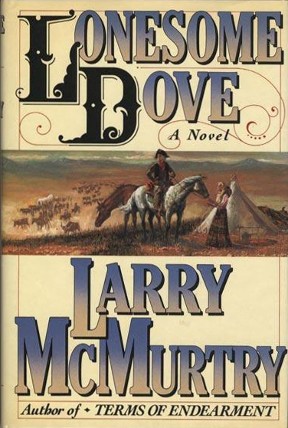
Lonesome Dove by Larry McMurtry


Pulitzer Prize-winning novel of epic proportions. Set in the American West towards the end of the nineteenth century. No other novel I've read has deeper or richer characters and plot, woven together with the eye of a master writer.
Violent, shocking, at times funny, poignant, sad and joyful. A triumph of a book. One of my all time favourite books of any genre. The TV miniseries is good too, but read the book first.
The other novels in the series, whilst still enjoyable reads, pale into insignificance against the original book, "Lonesome Dove". Don't be tempted to read the prequels first. Read "Lonesome Dove" and then, if you love the characters, which you probably will, read the sequel, "Streets of Laredo".


The Warlord Chronicles by Bernard Cornwell


The story of Arthur retold in gritty, action-packed realism. All the main characters are there. Merlin is magical, but it is never clear whether he real wields mystical powers or if he simply knows the ways of nature and the minds of men.
Native Britons defend their kingdom from the advance of the Sais (Saxons). Battles, betrayals, love and death.
Dark Ages Britain has never been so much fun to read.


The Saxon Stories by Bernard Cornwell


Bernard Cornwell again. This time a few centuries later and based firmly in historical fact. The story of Alfred of Wessex and the struggles against the Danes as told from the point of view of the larger than life character of Uthred of Bebbanburg.
Not quite as good as the Warlord Chronicles in my opinion, but great books nonetheless.


The Conqueror Series by Conn Iggulden

Conn Iggulden is firmly in the vein of Bernard Cornwell's action-packed storytelling, but focusing more on the actual historical figures rather than fictional characters involved in the events.
This, his second series of historical books, follows the rise of Genghis Khan and the Mongol nation. Gripping stuff.


The Emperor Series by Conn Iggulden


Conn Iggulden's first series follows the life of Julius Caesar. You may think you know all about the Emperor of Rome, but the story stretches over four books and never gets boring.
If you like Roman history, this series is a must.
Update: There is now a fifth book in the series - "Emperor: Blood of Gods". This tells the story of the bloody aftermath of Caesar's assassination.


Shieldwall by Justin Hill


I've only just read this book but think it deserves a place in this list. It is the first in a series leading up to the Battle of Hastings. Justin Hill's clever use of language that is directly derived from Old English and the meter of his prose that could so easily be imagined echoing in a great mead hall as part of a scop's epic saga, lends this page-turner a real sense of authenticity.
Strong characters, bloody battles and beautiful prose. What's not to like?


The Aubrey-Maturin Series by Patrick O'Brian


The absolute master of historical fiction. The best praise for this series is that it feels as if it could have been written in the early nineteenth century - the time the books are set. The attention to detail is incredible and the main characters, Jack Aubrey and Stephen Maturin, are so well formed that you feel you know them like members of your own family by the end of the series.
The writing can be hard going, especially to start with, but persevere and you'll be rewarded with twenty of the best historical fiction novels ever written.


The Troy Series by David Gemmell


David Gemmell is not best-known for historical fiction, he is much more famous for his fantasy writing, but this series, set around the battle of Troy is rich with historical details and Gemmel's usual flair for strong characters and exciting story lines.
Gemmell sadly died before finishing the last of the three books in the series and his wife, Stella Gemmell finished the book. The aptly named "The Fall of Kings" has an added poignancy as a result, but unfortunately suffers from a lack of consistency.


The Chronicles of Iona by Paula de Fougerolles


I have to admit that I haven't actually finished this one yet, but from what I have read so far, the writing evokes the time and place with aplomb. The characters of Columba and Aedan are robust and engaging and it is a story I know little about. It is set some eighty years before my own novel starts, so I was particularly interested to see how she deals with the location and the period.
So far I am not disappointed.


Legend by David Gemmell


OK, so this isn't really a historical novel. It is David Gemmell's first novel and set in his fantasy setting of Drenai. It tells the story of the siege of Dros Delnoch and introduces his wonderful character, Druss the Legend. Anyone who likes action-packed adventure, battles and great characters will love this book.
It is escapism at its best and one of my favourite books.