Showing posts with label writing. Show all posts

Monday, 14 March 2022

INTERVIEW: Peter Gibbons, author of the Viking Blood and Blade Saga

In the last year I've seen a new writer surge onto the action and adventure historical fiction scene, like a dragon-prowed longship cresting a wave on the Whale Road! Peter Gibbons published his first novel, Viking Blood and Blade in September 2021 and now, only six months later, he has just published the third in the series, Axes for Valhalla.

So, who is this new kid on the block (or Viking in the wic)? To find out, I invited him onto the blog to answer my questions.

First tell us about your latest novel, Axes for Valhalla.

Axes for Valhalla is the third book in the Viking Blood and Blade Saga. It's much more brutal than the first two books in the series, in that Hundr and his crew are faced by a merciless and implacable enemy. The scale of the book is also greater than the first two instalments, it’s set across Frankia and Ireland and is set seven years after The Wrath of Ivar, which was the second book in the series. A haunting voice from his past comes to Hundr seeking help, in what becomes his most dangerous adventure yet. A big part of the book is also set in Viking Age Dublin, which is very personal to me, having lived in Ireland for many years now.


How many books have you got planned for the Viking Blood and Blade Saga (great title, by the way!)?

I don't really have a firm number of books planned for the series, I'll see where the story takes Hundr and his crew. So far, they have survived the Great Heathen Army’s invasion of Saxon Britain, and met iconic Viking figures like Ivar the Boneless, Bjorn Ironside, and Haesten. That particular period of the Viking age was filled with war, as the Norse made their mark not only in Britain, but east in what is now Russia, and south past Spain as far as Constantinople. So there are lots of adventures for the characters to seek out yet, but they are dropping like flies at the moment, so hopefully they survive to experience the rest of that exciting world…

Where did you get the inspiration for the series?

I have always been inspired by the Viking Age, from being a kid watching the Vikings movie with Kirk Douglas and Tony Curtis (although it’s not very historically accurate!), to reading Bernard Cornwell’s Saxon Series. Also, I have lived in Dublin and Kildare in Ireland for the last 15 years, and Viking Age Dublin is still very tangible in the city. I travelled to Copenhagen to see the Viking Museum there, and the Viking Ship Museum just outside the city is amazing. The largest Viking Age warship in the museum was actually built in Glendalough in Ireland. That visit was really the catalyst to write the books, the history there is almost palpable.

Have you always wanted to write?

Yes, always. I am a ferocious reader of Historical Fiction, Fantasy, and Historical non-fiction books. Since I was a kid I have made up stories, but never had the courage to finish them off and show them to the world. It’s a strange thing to bring your passion to the notice of others, and have them read it. There is an element of fear and vulnerability in that process, but also exhilaration and validation to see that people enjoy what you have crafted.

What has been the biggest surprise for you since starting to write?

When I published Viking Blood and Blade, it was the fulfilment of an ambition to write, so to see that people actually liked the books was amazing, and humbling. But the biggest surprise is the engagement I have seen, particularly with readers. The reviews people leave are great, but it's amazing when someone has read and enjoyed one of the books, and takes the time to send an email or a social media message. It really makes all the hard work worthwhile, and is a great motivator.


One of the most popular pieces of writing advice is “write what you know” – what do you think about that?

I think that's OK in terms of how characters interact and human nature, which we all experience every day. But, what I love to read are books that take me into a different world, whether it's the Viking Age, the Roman Age, Ancient Sparta, or Middle Earth. So, my real enjoyment in writing is in creating a world and exploring it. I don't think anyone alive today knows the fear and brutality of the shield wall, or how it feels to trade blows with a heavily armed enemy who is a foot away from you swinging an axe at your head! Where “write what you know” applies I think, is in the human stories, or the relationships which take place in our fictional worlds.

Your output is impressive (three novels in six months!). What is your writing process?

I write very early every morning, and stick to a word count target. I also plan my novels and try to be as efficient with my time as possible. I spend a lot of time planning the story before I actually begin to write it, which then makes the process quite smooth.

What writer or book has had the biggest influence on your work?

It's hard to pin down one writer or book. As a kid I loved Tolkien, and would read Lord of the Rings once a year for many years. Obviously Bernard Cornwell is the pinnacle of adventure Historical Fiction, and I love the Sharpe series, and the Uhtred books. I do remember being blown away as a teenager reading Arrian’s The Campaigns of Alexander, the detail and descriptions made me feel as though I was actually in those battles and on that campaign.


What advice have you got for aspiring writers?

Just do it. You will never know if you can write unless you try. Self publishing is such a gift for new writers. At worst, you can fulfil your ambition and publish a book that nobody reads, but at best you could find that people actually enjoy your work, and seeing your story unfold on the page before you is an amazing experience.

What is the best book you've read in the last twelve months?

Obviously anything by Matthew Harffy…(Ha! Of course!) but Steven Pressfield’s A Man at Arms was good, and Joe Abercrombie’s latest was a good end to that series. I’m reading the first Mistborn book by Brandon Sanderson at the moment, and the way he creates his fantasy worlds and magic systems is brilliant.

What is the most exciting experience you've had as a result of writing?

Actually just experiencing that people have read and enjoyed what I have written. As a new author, I had all the fears and doubts that everybody does, and to see people not only buying, but enjoying my work is a thrill.

What plans have you got for the future?

To keep writing, and bringing new characters and adventures to life!

And now for the quick-fire questions:

Tea or coffee?

Tea, two sugars, lots of milk. I drink too much tea, but it’s the answer to all life’s problems… 

Burger or hot dog?

Burger. I have an issue, in that whenever I visit a well known fast food outlet, I cannot purchase a burger without also buying a cheeseburger to go with it.

Villain or hero?

Villain (not sure what that says about me as a person!)

Beer or wine?

Beer, or more specifically, lager.

Movie or TV series?

Movie

Happy ending or tragedy?

Tragedy

In the car, audio-book or music?

Audiobook

Thanks so much for taking the time to answer my questions.

Thanks for inviting me to complete this interview Matthew, also thanks for your support. Hopefully we can bring new readers to each other into the future.

Connect with Peter:

Website: https://petermgibbons.com/

Facebook: https://www.facebook.com/petergibbonsauthor

Amazon page: https://www.amazon.co.uk/~/e/B093WPM877 

Wednesday, 8 September 2021

Interview on The Reading and Writing Podcast

I have listened to The Reading and Writing Podcast for years, so it is extremely exciting and gratifying for me to be interviewed by Jeff Rutherford about A Time for Swords on his great podcast that has featured some of my favourite writers in the past.


Listen here: http://readingandwritingpodcast.com/matthew-harffy-interview/

Thursday, 4 March 2021

Battling with history: how to write fight scenes and battles in historical fiction


How do you write a battle scene which engages your readers and drives the story on?

It’s a question many authors of historical fiction fight with. Read my tips and advice in this Historia article.

Thursday, 21 January 2021

Interview with Gregory (Greg) Stewart

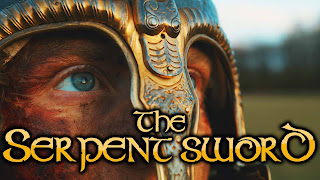
It has been quite a while since I have posted any author interviews, so I thought it was about time that I resurrected the format. It is with great pleasure that I welcome to the blog, author, screenwriter, playwright and fellow producer on The Serpent Sword TV series, Gregory (Greg) Stewart.

You have written screenplays, plays and novels. Which do you consider your true calling, or do you just think writing is writing? What do you most like and dislike about each art form?

I started out thinking I would write novels only. That was my childhood ambition. And yet I had a late start after spending most of my twenties going in a different direction and trying to get into the music biz. Around the time I finished my first novel (which wasn’t any good), a friend came to me with an idea for a film. I love film and thought why not try that too. So, while I was writing my first novels – essentially learning how to write fiction properly – I was also writing screenplays and learning how to do that as well. Writing for TV was a natural progression from film. I only wrote my first play last year, so that’s been more of a recent challenge. So yes, for me it’s all became part of one calling, to write. But fiction and film/TV are quite different disciplines and even though they share some common ground, I always saw them as separate ambitions.

In terms of what I like and dislike – for fiction, my favourite part is planning the story then later seeing or feeling the characters come to life as you work through the draft. The writing part can be the hardest, because of the time it takes and there’s always going to be a point where you feel lost, or that it’s not working. When you have a first draft there’s a certain euphoria, and as you read it it's fantastic to find the parts that come together, but also disheartening when other parts don’t work to the extent that there are going to be big rewrites. For screenwriting, the story part is trickier, because there are so many more limits, but once the story is locked in, the process is faster, and I don’t dislike any part of it. After writing fiction, screenwriting often seems like a bit of a break. My favourite part of screenwriting is the dialogue. I love trying to find the most interesting and effective words for the characters to deliver.

Your newest novel is called Astatara. Please tell us a bit about it.

Astatara has a classic fantasy set-up - two teenage children fall into a mysterious orb of light and find themselves trapped in an unknown and hostile world. Gradually they discover a strange culture with a terrifying prophecy and some very nasty villains. Yet as they work through this, trying to understand where they are and how they might get back home, the story also follows a man who in our world, is trying to unravel the mystery of the orb. This journey becomes a terrible obsession for him with dreadful consequences for lots of people around him. Eventually, the two stories connect, and the mystery of the orb is finally revealed. On the one hand it’s hopefully an exciting and gripping fantasy adventure – I had in mind a lot of Victorian era adventure stories by writers, such as Jules Verne or Conan Doyle – but on the other hand it’s also a darker story about obsession, rivalry, Communist Russia, familial disintegration and reunion. The scope of it is quite ambitious! Whether, I’ve completely succeeded or not, I don’t know.


How many novels are there going to be in each of your series?

Astatara is a standalone book. Wolf Head and its sequel, The Strange Case of Sarah Wynter are part of the Trasis series. A novella, FerrisWheel is also part of that series as a side story. I have outlines that take me up to book six and expect there’ll be a seventh after that. I have another series on the starting blocks – The Devil’s Fairytale – which will be five books. Most of that series is already written and I’m planning to publish the first two of those books later this year.

Your novels don’t seem to conform to genres. Is that a conscious decision?

Everything needs a label! Yes, its tricky for me to write in clear cut genres. It’s definitely all speculative fiction – fantasy, horror, sci fi – but there’s often some crime element to it as well. And I love exploring history so if I can coincide the story with some past event that’s always an attraction. If labels are needed – and I know they are – then I would say both the Trasis and the Devil’s Fairytale series are fantasy horror. Astatara is sci fi fantasy. Red Bunker – my giveaway novella for subscribers – is sci fi horror.

What are you working on at the moment?

The Strange Case of Sarah Wynter is due to be published on 5th March, so I’m doing final edits on that. Then obviously, there’s all the work ongoing for The Serpent Sword adaptation too and hopefully we’ll be pitching that to some power players soon. I’ve got another TV project that I’m in the process of finding somebody to partner up with, and a film project that I’m working on with an actor and producer which we’re hoping to get some development funding for. Soon I’ll have to start planning the first Devil’s Fairytale release and perhaps start work on the next Trasis novel – which is going to be called The Vampire States of America.


What are your ambitions for your writing? What would signify success for you?

The self-publishing is only just getting off the ground. I’ve had some success with Wolf Head which has gone down well with readers, which is very encouraging. But I need to build on that now. Try to get my head above that parapet. There are so many writers out there and it’s a longer game that I’ll have to keep working on. Ideally, I’d like to get picked up by a publisher.

For the film and TV work, it would be getting something on screen. I’ve had some false starts – a feature film I wrote in 2017 is stuck in the final stages of post-production due to money problems and another feature I was commissioned to write in 2018 was cancelled just a few weeks before filming. That’s quite hard to take when you put a lot into something that should have significantly raised your profile. But it’s not uncommon in the industry, so I can only hope I’ve paid my dues and that The Serpent Sword will be the one to get out of the gate.

What writers, books and movies have had the biggest influence on your work?

Growing up it was a lot of fantasy. Tolkien, CS Lewis, The Belgariad by David Eddings, the Dragonlance books, Gemmell, Moorcock – particularly Elric. Later, Stephen King became quite an influence, particularly The Stand. Also, Tad Williams' Otherland series had a huge impact. It’s such a great mash-up of sci-fi, fantasy, crime etc. Mary Shelley’s Frankenstein was also a key book for me, and Victor Hugo’s Les Miserables. The scope and power of that story is astonishing. Later again it was Paul Auster, Cormac McCarthy – The Road particularly I think is one of the best novels ever written – and James Ellroy. More recently I’ve become obsessed with William Trevor. I think his books are perfect.

With films, I’ve seen so many that it’s difficult to separate the influences from the escapism. In terms of early film experiences that jolted me, it was the original Star Wars trilogy, Jaws and Alien. Beyond that it’s an eclectic mix. I always loved the Hammer horror films and lots of Hitchcock, Rear Window particularly. American Werewolf. The Good the Bad and the Ugly. And perhaps less obviously, Olivier’s Richard III. But I suppose if there was one that changed the way I looked at film it was Taxi Driver. I think I was 21 when I saw it on VHS on a small TV in my bedroom, but it was such an intense experience and it made me aware of screenwriting and directing and acting combining to create this art form in a way that I’d never grasped before.

What are the best and worst things about being a writer?

The creative side is all good, really. Storytelling is so much fun and then having people enjoy and appreciate what you do is unbeatable. The worst part is how difficult it is to break through.

What is the best book you've read in the last twelve months?

Probably a tie between William Trevor’s Fools of Fortune and The Haunting of Hill House by Shirley Jackson. As I said before, I think William Trevor’s books are flawless. Fools of Fortune is a about a family caught up in the Irish war of independence and tells how that affects them and how they come to terms with it in later years. Hill House was a book which I felt I’d read before because it’s been adapted for the screen so many times, but I hadn’t, and it’s a great psychological horror. Jackson really gets into the splintering mindset of the lead character. Such elegant and effective writing. I’ll definitely be reading more of her books.

What is the best film or TV you've seen in the last twelve months?

In between lockdowns I managed to go and see Mank at a local cinema, which I thought was great. I love that kind of filmmaking, such precision, detail and nuance. On TV I’ve started watching Steve McQueen’s Small Axe film series and thought ‘Education’ was terrific. Also, I love Better Call Saul and that most recent series was electric. I also very much enjoyed the second season of the Mandolorian.


And now for the quick-fire questions:

Tea or coffee?

Herbal tea or water please.

Burger or hot dog?

Pizza.

Villain or hero?

Every good story needs both.

Beer or wine?

Wine at home. Beer when out.

Movie or TV series?

Movie usually.

Happy ending or tragedy?

I seem to write happy endings for my novels and tragic ones for my screenplays.

In the car, audio book or music?

Audio book. Currently listening to The Lord of the Rings.

Thanks so much for answering my questions, Greg. Good luck with all the projects (especially The Serpent Sword!). ;-)

Connect with Greg at:


Sunday, 29 November 2020

Guest post: The Mallory Saga by Paul Bennett

It's been a long time since I have invited an author onto the blog for a guest post. But I love guests and it is with great pleasure that I welcome Paul Bennett on today to tell us all about his series of novels, The Mallory Saga, set during The French and Indian War and its aftermath, and the Revolutionary War.

Having dabbled in writing and poetry over the years, Paul had harboured the desire to write the next great American novel, but life got in the way until 2013 when he started writing book reviews, and communicating with authors about the process of writing a novel. His dream returned, and the fruit of his labours became the Mallory Saga novels.

So, over to Paul to tell us about the inspiration and the history behind the books.

The inspiration to write was, in the beginning, merely to see if I could do it.  I had written short pieces over the years but to tackle a full blown novel was a daunting prospect.  Once the seed was planted I came up with a rough idea of telling the story of three siblings living somewhere in colonial America.  Choosing that general locale was a natural fit for me as I’ve been a lifelong student of American history and I felt that if I was going to write a historical fiction novel, it might be prudent to choose a subject I knew a little about. I picked The French and Indian War as the starting point for what was now becoming a possible series of books that would follow the Mallory clan through the years.  That war intrigued me and I saw a chance to tell the story through the eyes of the Mallory family.  It also provided me with the opportunity to tell the plight of the Native Americans caught up in this conflict.  The French and Indian War paved the way for the colonies to push further west into the Ohio River area.  It also set the stage for the events of the 1770’s.  Britain incurred a huge debt winning that war and looked to the colonies for reimbursement in the form of new taxes and tariffs.  Well, we all know how those ungrateful colonists responded. 

As to the name Mallory – I have a photo hanging on my living room wall of my great grandfather, Harry Mallory.  I got to know him when I was a young boy and was always glad when we visited him.  He lived a good portion of his life in western Pennsylvania which is where much of Clash of Empires takes place.  So, as a gesture to my forebears, Mallory became the name of the family. 


Clash of Empires


In 1756, Britain and France are on a collision course for control of the North American continent that will turn into what can be described as the 1st world war, known as The Seven Year’s War in Europe and The French and Indian War in the colonies.  The Mallory family uproots from eastern PA and moves to the western frontier and find themselves in the middle of the war. It is a tale of the three Mallory siblings, Daniel. Liza and Liam and their involvement in the conflict; the emotional trauma of lost loved ones, the bravery they exhibit in battle situations.  The story focuses on historical events, such as, the two expeditions to seize Fort Duquesne from the French and the fighting around Forts Carillon and William Henry and includes the historical characters George Washington, Generals Braddock, Forbes and Amherst.  The book also includes the event known as Pontiac’s Rebellion in which the protagonists play important roles.  Clash of Empires is an exciting look at the precursor to the events of July 1776; events that are chronicled in the second book, Paths to Freedom, as I follow the exploits and fate of the Mallory clan.


Paths to Freedom


In Paths to Freedom the children of the three Mallory siblings begin to make their presence known, especially Thomas, the oldest child of Liza and Henry Clarke (see right there, already another family line to follow), but Jack and Caleb, the twin sons of Liam and Rebecca along with Bowie, the son of Daniel and Deborah are beginning to get involved as well. The French and Indian War, the historical setting for book 1, was over, and the Mallory/Clarke clan is looking forward to settling and expanding their trading post village, Mallory Town, now that the frontier is at peace. And for a time they had peace, but the increasing discontent in the East, not so much toward the increasing rise in taxes, but the fact that Parliament was making these decisions without any input from the colonies, slowly made its way west to the frontier. Once again the Mallory/Clarke clan would be embroiled in another conflict.
Another facet of my saga is that the main characters are not always together in the same place or even the same event. In Paths my characters are spread out; some have gone East, some have gone West, some are sticking close to Mallory Town, so in effect there are three stories being told, and that means more plots, subplots, twists and surprises. 

One of the aspects of the lead up to The Revolutionary War was the attempt by the British to ensure cooperation with the Native Americans, especially the Iroquois Confederation. The British had proclaimed that they would keep the colonies from encroaching on tribal lands, a strong inducement indeed. However, some tribes, like The Oneida, had established a good relationship with the colonists. I knew right away when I started book 2 that the relationship between the Mallory’s and the tribes would be part of it. Among the historical Native Americans who take part in Paths are the Shawnee Chiefs; Catecahassa (Black Hoof), Hokoleskwa (Cornstalk), Pucksinwah (father of Tecumseh), and the Mingo leader Soyechtowa (Logan).

I also realized that I needed to get someone to Boston, and the Sons of Liberty. Thomas Clarke, the eighteen year old son of Liza and Henry, was the perfect choice for the assignment (mainly because he was the only child old enough at the time). Through him we meet the luminaries of the Boston contingent of rebels, Paul Revere, Dr. Joseph Warren, John Hancock, and the firebrand of the bunch, Sam Adams. Plenty of history fodder to be had…British raid in Salem…Tea Party…the famous midnight rides…culminating with the Battle of Lexington and Concord. Oh yes, plenty of opportunities for Thomas.


An untenable situation arises in Mallory Town resulting in Liam and his two companions, Wahta and Mulhern, finding themselves on a journey to the shores of Lake Michigan and beyond. Driven by his restless buffalo spirit, Liam has his share of adventures; encountering a duplicitous British commander, meeting many new native tribes, some friendly, some not so much. A spiritual journey in a land not seen by many white men.

I ended Paths with the Battle of Lexington and Concord, the first shots of The Revolutionary War. The flint has been struck; the tinder has taken the spark. Soon the flames of war will engulf the land, and the Mallory clan will feel the heat in the third book, Crucible of Rebellion

Crucible of Rebellion


The timeline for Crucible is 1775 – 1778. I decided to split the Revolutionary War into two books, mainly because there is so much more action as opposed to The French & Indian War…and because as I was writing, my characters insisted on some scenes I hadn’t previously thought of. 😀Book 4 of the saga is in the planning stages. Tentative title – A Nation Born.

The three Mallory siblings, Daniel, Liza, and Liam play important parts in Crucible of Rebellion, but it is their children who begin to make their marks on the saga. Their youngest son, Ethan, and their daughter Abigail, of Daniel and Deborah travel with their parents to Boonesborough, and reside there with Daniel Boone. The war reaches even this remote frontier, prompting Daniel and Deborah to move further west in search of peace. However, the banks of The Wabash River prove not to be immune to conflict.
Their eldest son, Bo accompanies Liam’s twins, Jack and Cal, first to Fort Ticonderoga, then to Boston with a load of cannon for General Washington’s siege of Boston (the Noble Train of Artillery with Colonel/General Henry Knox). In Boston they meet up with Liza and Henry’s son Thomas, who is no longer a prisoner (can’t say more than that), Marguerite, and Samuel Webb. 

General Washington has plans for the Mallory boys…plans which see some of them in a few of the more important battles of the war… the escape from Long Island, the surprise attack at Trenton, the turning point battles at Saratoga NY, as well as taking part in numerous guerrilla type skirmishes. 
A long ways away from the conflict Liam, with Wahta, are living with the Crow along the Bighorn River. Liza and Henry made the trip to Boonesborough with Daniel and Deborah, but do not go with them to The Wabash….they have their own adventures.


Although I write fiction tales, the historical aspect of the saga provides the backdrop. History is often overlooked, or is taught with a certain amount of nationalistic pride, whitewashing controversial events, much to the detriment of humankind. So I hope that what I write might help broaden the reader’s horizon a bit, that what they learned in school isn’t necessarily the whole story. Two main historical topics in the story of America that frequent The Mallory Saga are slavery, and the plight of the indigenous people who have lived here since before the founding of Rome; two historical topics that linger still in America’s story. Entertainment and elucidation; lofty goals for a humble scribe telling a tale.

Connect with Paul Bennett and buy his books


Wednesday, 17 June 2020

Author of the Day on Manybooks.net

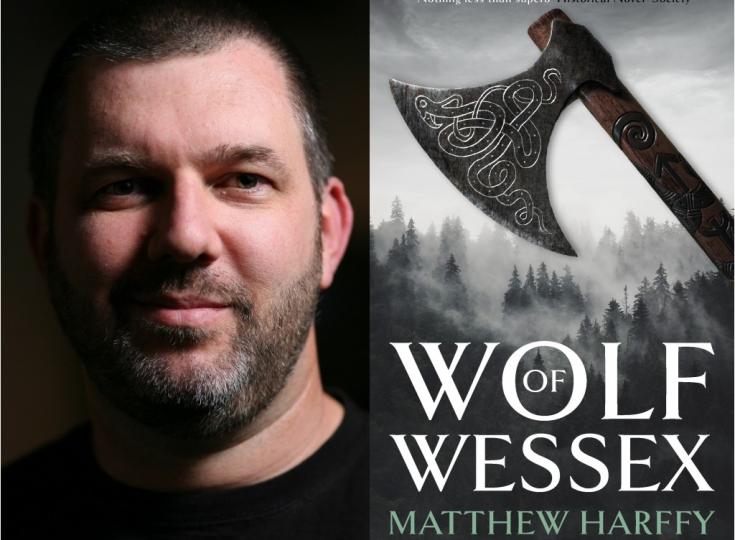
I was recently featured as Author of the Day on manybooks.net. I talked about the inspiration behind Wolf of Wessex, research, my not-so-secret talents, The Serpent Sword TV series project, and my dog, Blue.

Matthew Harffy - Action-Packed Thriller Set in the Forests of Wessex

wolf1v

Please give us a short introduction to what Wolf of Wessex is about.

Wolf of Wessex, is my first departure from the seventh century, which is the period in which my series, The Bernicia Chronicles, is set. Wolf of Wessex takes place a couple of centuries later in the early years of the Viking Age and follows the tale of an aging warrior, Dunston, as he tries to find a man’s vicious murderers, keep the victim’s orphaned daughter alive and uncover the dark secret that threatens to plunge the kingdom into war. The book has been very well received, with The Times calling it “a treat of a book”.

What inspired you to write about the forests of Wessex AD 838?

I love the outdoors and have been interested for a long time in survival and bushcraft, such as is taught by the likes of Ray Mears, who has presented many successful documentaries and written lots of fabulous books on the subject of how people from different cultures live as one with the land, harmoniously harnessing nature to support them. I live in Wiltshire, England, which in the ninth century was part of Wessex, and near my house is one of the remaining parts of the ancient woodland that was known as Selwudu (Selwood, or Sallow Wood). Walking among the trees there, I found my mind transported back to a time when much of the land was covered in woodland, and I began to think what it would have been like to live alone deep in the forest away from the noise and concerns of the world. And so, Dunston was born.

Read the full interview on Manybooks.net


Monday, 22 July 2019

The King’s Furies Blog Tour

Today on the blog I have the great pleasure to welcome author Stephanie Churchill. Stephanie has been a long-time fan of the Bernicia Chronicles and it is always a joy to read her review of each book. Her reviews are long, thoughtful and insightful in ways that make me wonder if she doesn't know more about my books and characters than I do myself!

Like me, Stephanie is also writing a series of novels (Crowns of Destiny), which started back in 2015 with The Scribe's Daughter.

Stephanie’s writing draws on her knowledge of history even while set in purely fictional places existing only in her imagination. Filled with action and romance, loyalty and betrayal, her writing relies on deeply drawn and complex characters, exploring the subtleties of imperfect people living in a gritty, sometimes dark world. Her unique blend of historical fiction and fantasy ensures that her books are sure to please fans of historical fiction and epic fantasy literature alike.

The Scribe's Daughter was followed by The King's Daughter.

The third novel in the series, The King's Furies, is out on 30th July.


MH: Welcome to my blog, Stephanie. Before we start the interview, something to drink?

SC: I’d love a nice craft beer, thanks. What do you have on tap?

MH: I don't have any craft beer on tap, but how about a pint of Wadworth Game of Stones? It is brewed just down the road in Devizes and I think you'll approve.


SC: Thanks, that sounds great. And thanks for letting me stop by for a chat finally. Looks like all that harassment has finally paid off.

MH: Well, it was either give in or face a legal battle, but I decided this was easier. But before you get all smug about it, can we talk about genre for a minute? You and I have talked about this a few times in the past, but I know you like to be clear for readers on the topic of the genre of your books. They are categorized as fantasy, but they are lacking in magic, creatures, and other fantastical elements.

SC: Yeah, thanks for bringing this up. It’s as good a place to start as any.

I love history. Always have. I know a lot of historical fiction authors, and I read a lot in the genre. For people who know this about me, it’s very common for them to ask me why I didn’t just write historical fiction since it seems the most obvious choice. The answer I’ve given most often is that, quite honestly, I am scared off by the research. I know what it would take to do the kind of quality research I’d demand of myself, and I don’t feel like I want to commit to it.

But as I’ve thought more deeply about what motives me to write, I’ve discovered another reason. As much as I love history, the history itself isn’t what draws me to writing; it’s the storytelling. Story moves me more than the history, and I think I knew this intuitively when I started off. I wanted to be free to tell a story any way that worked without being constrained by facts. I read a lot of historical fiction (and much less sword and sorcery fantasy), so a historical-feeling setting became the narrative device that felt most comfortable to me.

Sorry to be so long-winded about it. It’s just a good question.

MH: So historical-feeling. Got it. Let’s talk about your world a bit since there isn’t any real history in your books. What were your influences for the setting?

SC: I’m most comfortable with medieval history and culture, so that was definitely the period I drew upon to create most of the world for my characters (medieval with a smattering of early Tudor). A couple of locations in the books, Elbra and Pania, have some Eastern European influences in language and social ranks of aristocracy as well as some vaguely Mediterranean settings. I created an entire people group in The King’s Furies based on Ethiopian culture. Generally speaking, the worlds will feel familiar to people in Britain and North America. I live in Minnesota, USA, and we have brutally cold winters with comfortable but humid summers. Like Britain, it’s temperate, though quite a bit more extreme on either end of the seasons. It’s easy for me to imagine my characters bundled up in furs and cloaks while tromping through the snow just as much as it is to have them bake in the sun.

MH: How about historical influences on plot and characters?

SC: Historical events and individuals definitely inspired some of the characters and events in my books. Nothing original here, but I’ve always been interested in the Wars of the Roses and the idea of York vs. Lancaster. I know that history has inspired a lot of books, and I can’t say I’m much different. I also can’t help but admit that many of the historical novels written by Sharon Penman have influenced me: the historical events, her characters, her descriptions, and settings, etc.

MH: You’ve made it no secret that you love Beobrand. Are there any similarities between him and any of your characters so that my own readers might find him or her familiar?

SC: Yes, I might love Beobrand. But that’s supposed to be a secret. Can’t we just keep that between the two of us? So… Beobrand tends to brood a bit. He’s dark and moody and broody and conflicted. Just like the main character in my new release, Casmir Vitus, King of Agrius. Like Beobrand, leadership rests uncomfortably on Casmir’s head. He never wanted to be king, but the job is his, and he has to make the best of it. Unlike Beobrand, Casmir was raised to the role forced upon him though, so he performs the task admirably when he remembers he’s not meant to do the job alone. It’s when he acts out of a spirit of entitlement typical of kings (contrasting to Beobrand’s more plebeian upbringing) that he lapses into his imperious and haughty tendencies. Nothing extreme, but readers will sense it. I used this part of his character to explore the dark places of his soul as the events in the book push Casmir to the limits of his strength and test his character.

MH: I’m guessing Casmir doesn’t wield a sword and smite his enemies in the same way Beobrand gets to?

SC: Casmir lives in a peaceful time. Or at least peaceful in the sense that there is no warfare. Agrius has been at peace since his father took the throne. Well, all is peaceful on the surface anyway. Even if Agrius had been at war, kings in his time don’t actually get to fight. So no, he doesn’t get a chance to show off his combat skills except at the pell. His book has more relational tension and political intrigue rather than violence. Courtiers can be very deceitful, so the palace is more viper pit than a gladiatorial arena.

MH: Before I let you finish your [craft beer brand], can you give us a little snippet from The King’s Furies?

SC: Certainly! Here’s a short scene that demonstrates part of the beginning of Casmir’s inner conflict. From the King’s Furies, chapter 53:

“Mathiasen.”
It took a moment for me to realize it was the scriptstóri who had spoken. I swung around, taking a menacing step toward him. “What did you say?”
The young man backed up, nearly colliding with the wall at his back. “A-Anton Mathiasen... Your Grace.”
“Irisa, who is this?” I asked, not breaking my visual hold on the scriptstóri.
“This is Annor, the one I told you about. He has been helping me in the evenings while you were away.”
“How do you know that name?” I asked Annor.
Irisa must have sensed my rising fury and reached out a hand for my sleeve. A pallor of sickness washed over the young scriptstóri, and he cast terrified eyes on Irisa. Rather than step in to help him, Irisa stood resolute, waiting for his answer.
“I... I overheard it.”
I pounced like a cat on a mouse. “Where? Where did you overhear the name?”
“In the Bibliotheca.” Annor struggled to find air, grimacing as he sought the words while fighting off his terror. He fumbled with his hands, his fingernails digging into his palms in his anxiety. He could not bring himself to look me straight-on.
“Where in the Bibliotheca? Is it conspiring scriptstórii again?” Annor blanched once more as I grasped a handful of his robe in my fist and twisted, pressing my face so close to his that he had to turn to the side to avoid having his nose crushed. “Who has betrayed me?”

SC: Thanks again for letting me stop by. Now that we’re done here, I’m going to go play with Blue. He’s the real reason I wanted to come visit.


Blue says Hi!
Next on her blog tour, Stephanie is chatting with the fantastic Sharon Kay Penman. Don't miss that!


You can find Stephanie's books on Amazon.

Purchase The Scribe’s Daughter: mybook.to/thescribesdaughter
Purchase The King’s Daughter: mybook.to/TheKingsDaughter
Pre-order The King’s Furies: mybook.to/TheKingsFuries

Find out more about Stephanie:

Stephanie’s website: https://www.stephaniechurchillauthor.com/

Thursday, 14 February 2019

Video Interview with writer Matt Whiteside

A few days ago, I did an interview on a new YouTube channel run by indie writer, Matt Whiteside. It was a fun interview and we talked about lots of things including writing, getting published, history, castles and swords. And I even read a few lines from my very latest work in progress, Dark Frontier.

Check it out and subscribe to Matt's UniWeb Channel for more author interviews.


Sunday, 4 November 2018

I couldn't NOT write if I tried, and other cliches!

I've often read the cliches quoted by other authors about how they couldn't NOT write or how their characters speak to them. 

I've always thought such things were nonsense. After all, I have now written six novels, so I can speak with some authority as an author, but I have published all of them since turning forty. The fact that I went for the first forty years of my life without feeling compelled to write has sometimes made me feel like a bit of a fraud. Perhaps only real authors cannot avoid writing. Maybe for real writers the compulsion to put pen to paper is stronger than I had ever felt.


But, as with so many cliches maybe the truth is that you only really understand them when they happen to you. Recently, I wasn't able to write for a couple of weeks and suddenly I got it. I imagine it's like an athlete who suffers an injury and is unable to compete in their chosen sport. As anyone who knows me will attest, I'm no athlete but the frustration at not being able to sit down and write was very real. I didn't hear the voices of my characters whispering to me, and I didn't dream of the stories that I must tell, but I did have the nagging feeling that I should be adding words to my current work in progress.


People occasionally ask me if I enjoy the writing process. This is a very difficult question to answer. It is extremely taxing to write a novel-length piece of prose, particularly one that others are going to want to read. There's the research and planning, and then, of course, the seemingly endless hours of writing page after page of the first draft, followed by yet more hours of editing and polishing. This is then followed by further edits and tweaks that are needed after my editor, copy editor, proofreader and test readers have all had their say. So I think to say that I enjoy the process would be a stretch. But the simple fact is I do enjoy the final product of the creative process and I especially like hearing from people who have enjoyed reading the books.

I recently got an email from a reader that made my day. It was a message thanking me for writing the Bernicia Chronicles. This isn't that unusual, and I always love getting emails like that from readers. What writer (or anyone for that matter) doesn't like receiving praise? But this email in particular stood out from the norm in that the sender seemed to fully understand how difficult it is to actually wring the stories out of my brain. He likened my writing to giving him a time machine, an ability to lose himself in the past as depicted in my stories, taking him away for a brief time from the humdrum day-to-day life of the 21st-century.

What made the email even better was the timing. It came after this extended period when I had been unable to write and I was facing the uphill struggle of getting back into the swing of the writing process. This was a very welcome boost, reminding me that there are many people looking forward to reading my next books. And this email, from someone I do not know and will probably never meet, provided me with a much-needed lift. For although I now understand the writers who say they could not NOT write, because I too feel as though I always have homework that needs to be handed in tomorrow, it doesn't make writing any easier!

So what am I saying with this whole rambling post? Perhaps this is just a way of avoiding carrying on with the writing! I'm sure that is true, but I also think I'm trying to say two things: first, don't dismiss cliches, as usually they are true, at least for someone, and secondly, if you have read and enjoyed a writer's work, don't underestimate the power you have to lift their morale with an email, tweet, Facebook comment or an online review. Writing is by its very nature a solitary pastime, and as the writers are alone for a long time during the gestation period of each book, it is all too easy to lose sight of why we do it.


So thank you to everybody who has taken a moment to contact me either directly or indirectly via reviews, it is really appreciated!

And now I'd better get back to writing my new book, which will be the first novel I have written outside of the Bernicia Chronicles series. I can't put it off any longer, I've got that nagging feeling that I need to get on with it. Those characters are calling to me. I couldn't NOT write it now even if I tried!

Wednesday, 21 February 2018

REVIEW: A Game of Thrones by George R.R. Martin

A Game of Thrones (A Song of Ice and Fire, #1)A Game of Thrones by George R.R. Martin
My rating: 5 of 5 stars

"How is it that you haven't read this before now?" I hear you cry.

Basically, I think the success of the HBO series put me off. In a strange way it seemed over-hyped and the more publicity the TV series got, the more it seemed like the success of the books must be hype too. Oh, how wrong I was. This is fantasy writing at its very best. Hell, it's page-turning writing at its best. There is no need to go into details of the plot and characters, as anyone who is interested can find out all they want to know with a quick Google search.

But suffice it to say that the characterization is so well done that you feel for each of the diverse players in the great game of thrones being played out in a fantasy world every bit as rich and detailed as any real historical setting. Martin has breathed life into a world with its own history, myths, religions and peoples, in what must be, after Tolkien, one of the most spectacular examples of fantasy world building of the twentieth century.

The book is long, but it is gripping, and written in short chapters, each of which focuses on a different character from the select group of "Point Of View" characters. These include members of all the major factions involved in the brewing war for the crown of the seven kingdoms. Each chapter drives the plot forward and none of them is superfluous.

If you like fantasy, or just well written epics with strong characters and a gripping plot, do yourself a favour and read this book. You will not be disappointed.

View all my reviews

Sunday, 3 December 2017

What Sharon Bennett Connolly learnt when writing Heroines of the Medieval World

It is my pleasure to welcome to my blog, Sharon Bennett Connolly, author of Heroines of the Medieval World and blogger extraordinaire!

Sharon has been fascinated by history for over thirty years and before embarking on her writing career she had many jobs including being a tour guide at historical sites, including Conisbrough Castle.


She is now having great fun, passing on her love of the past to her son, hunting dragons through Medieval castles or exploring the hidden alcoves of Tudor Manor Houses.

She runs the fabulous blog, History…the Interesting Bits, where she writes about the lesser-known stories and people from European history. Her first non-fiction book, Heroines of the Medieval World, was published by Amberley in September 2017. Sharon is now working on her second non-fiction book, Silk and the Sword: The Women of the Norman Conquest, which will be published in late 2018.

What Sharon Bennett Connolly learnt when writing Heroines of the Medieval World


Getting the opportunity to write Heroines of the Medieval World was a dream come true – I have always wanted to write a book. It came about after I entered a competition run jointly by Amberley and the Historical Writers Association, where I had to send in a synopsis of the book, chapter plan, 2,000 word introduction and a short bio of myself. I got the best rejection letter ever – and email from Amberley saying I didn’t win the competition, but they liked my idea so much they would like to publish it anyway. Writing your first book is a huge learning curve. Heroines of the Medieval World is a non-fiction book, so it took a huge amount of research, checking and double-checking facts and sifting the fact from the fiction.


The first task was picking my Heroines. I had to decide who to include, who to leave out. I wanted a wide-ranging assortment, with a combination of the famous, not-so-famous and even the obscure. Some heroines more-or-less refused to be left out – such as Eleanor of Aquitaine and Joan of Arc. You can’t have a book about medieval heroines and leave out the two everyone knows about. They were also two of the easiest to find information on, because there has been so much written about them over the years. Although, the fun part with each of these women was that some of the sources were in French. I have ‘A’ Level French and have worked in Paris and at Eurostar, so I’m not ‘scared’ of French. Although medieval French is a different level! It was challenging and time consuming, but it was good to get the old brain cells working overtime.

With the more obscure Heroines, however, it can prove difficult to find enough information in order to write their stories. I like to use as many sources as possible, preferably primary sources, to make sure I get a full picture of the lady in question. Some of my Heroines were very local to where I grew up, in Yorkshire and Lincolnshire, such as Nicholaa de la Haye; luckily, although Nicholaa is practically unknown on the national and international stage, as Castellan of Lincoln Castle, she is a local celebrity and as a result there was a lot of information in and around Lincoln itself, including the church in which Nicholaa is buried. It also meant I could visit the locations associated with them, explore Lincoln Castle and chat with the guides there, to get a more personal view of Nicholaa. It also helps that Nicholaa has been in the news in 2017; this year is the 800th anniversary of the Lincoln siege in which Nicholaa held the French at bay until William Marshall could get to her with his army.

These days there are some very useful sources available at your fingertips, including some of the greatest chronicles of the medieval era, such as Froissart and Orderic Vitalis. British History Online provides historic documents such as wills, pipe rolls, court proceedings etc. A fabulous resource came from Columbia University, who have a project known as Epistolae, in which you can find the Latin letters – and their translations - of some amazing medieval women, such as Heloise, Hildegard of Bingen and Adela of Normandy. These are the letters written, or dictated, by the women themselves and provide the best insight into what these women thought and what they were concerned about, not just in their everyday lives, but in their wider influence on the world. The problem with this, of course, was having to try to stay focused and avoid getting side-tracked with so many fascinating letters to read.

The research itself helped me to define the structure of the book. It made me realise that the best way to organise the chapters was to use the reasons the women were heroines – such as the warrior women, the writers, the rulers and the survivors. Divided into twelve chapters, this meant the book can be read from cover to cover, or by dipping into each individual chapter, depending on which type of Heroine you would like to read about.

I hope it works.

========

Useful links:

Blog: https://historytheinterestingbits.com/
Facebook: https://www.facebook.com/Thehistorybits/
Twitter: @Thehistorybits

Buy Heroines of the Medieval World:
Amazon UK
Amazon US

Wednesday, 25 October 2017

What inspires my stories?

Where does inspiration come from? Here is a guest post I have written on fellow historical fiction author Mary Anne Yarde's blog about some of the inspiration behind The Bernicia Chronicles.

https://maryanneyarde.blogspot.co.uk/2017/10/authors-inspiration-matthew-harffy.html

Thursday, 15 June 2017

What Ruadh Butler learnt writing Lord of the Sea Castle

Today's guest blog post in the "What I Learnt..." series comes from historical fiction author, Ruadh Butler. Ruadh as born in County Derry at the height of the Troubles. A degree in Biomedical Sciences at the University of Ulster, as well as study in Virginia and London, couldn't entice him into a life of scientific research, but to keep the wolf from the door he worked in laboratories, in newsrooms, and in bars. He even tried his hand as a soldier, musician, security guard and lifeguard during his twenties. Ruadh lives in Northern Ireland and Lord of the Sea Castle is the second novel in his Invader series.


I was lucky enough to get an advance copy of Lord of the Sea Castle. It's a great read. Here's what I said about it:

"From tourneys to treachery; from Welsh Marches to Irish marauders, Ruadh Butler propels us into the tumultuous times of the twelfth century. The clangour of swords and battle cries of knights echo from the pages of 'Lord of the Sea Castle', as Butler tells a gripping tale with skill, verve and gusto."

What Ruadh Butler Learnt writing LORD OF THE SEA CASTLE


1. You can still visit ruins built by the Normans in 1170.

My new novel, Lord of the Sea Castle, takes place in the summer of 1170 and follows directly the events of Swordland. This book charts the activities of a small advance force of some 120 men (and one woman) that cross the Irish Sea in order to build a bridgehead and prepare the way for an invasion by a Welsh baron named Strongbow. Led by the wonderfully named Raymond the Fat, the historic figure upon whom my lead character is based, they immediately began constructing a defensible position on a headland called Dun Domhnall in south County Wexford. I had the pleasure of visiting the site (which is now called Baginbun) a few summers ago as part of my research and was amazed to find that the earthworks his men had built almost a millennia ago were still visible. And what a construction! The wooden palisade which had once topped the double entrenchments would’ve disappeared or been stolen soon after 1170, but the bulwarks still soared over my head, running between the sea cliffs for two hundred yards or so. It was not difficult to stand atop those dramatic ruins, in that wind swept place, and imagine what it might’ve been like to be a Norman invader beset on all sides by enemies and pounded by the weather off the ocean. Given the importance of the campaigns that followed I admit to wondering if the site deserved better than a mere sign noting the date of Raymond’s arrival.

Baginbun Head with the Norman earthworks running east-west between the two beaches at the narrowest point in the headland.

2. Irish names can be tough!

While Ireland was an easily accessible place for traders from across Europe in the Age of Invasions it nonetheless remained, culturally at the very least, an alien place to those from the Romanised world of Christendom (as well as to us now in the western world). This is perhaps most readily seen in the difficulties pronouncing the non-Anglicised versions of places and people. Where does one start when attempting Máel Sechlainn Ua Fhaolain, Donnchadh Ua Riagháin and Máelmáedoc Ua Riagain?! They are certainly confusing, but to go with ‘Connor’ rather Conchobar or ‘Rory’ rather than Ruaidhrí would be for me to lose an immediate and easy access to what the Normans experienced when they first arrived in medieval Ireland. That is the distinct and very real feeling of unease with the unfamiliar. My desire is to transport and immerse the reader in the twelfth century and I hope that this small ruse helps that cause! In Lord of the Sea Castle, the second instalment of the Invader Series, readers will be introduced to the world of the Ostmen. They were the descendants of the Viking Norse and Danes who had founded the great cities of Ireland such as Waterford and Dublin in the ninth and tenth centuries. A three hundred year old and unique culture by 1170, the Ostmen retained many of the customs of their Scandinavian ancestors, mingling them with Gaelic beliefs adopted from the natives. It was against them that the full force of the Norman war machine would be directed. So rather than names like Diarmait we will have to contend with Sigtrygg and instead of Osraighe we visit places as easy to remember as Veðrarfjord and Strangrfjord!

3. The Normans were the first proponents of Ikea-style self-assembly wares.

They were the descendants of Scandinavians after all! However, the Norman version of Ikea products was less about furniture for inside the house and rather more about exteriors. They brought ready-to-assemble wooden castles with them whenever their sights settled upon a new land to conquer. Many of these fortifications were subsequently rebuilt in stone, but when they first took England, swarmed across Wales, and later invaded Ireland they erected motte and bailey castles. Speed of assembly was essential. The castle was the greatest weapon that the Normans had to help them survive beyond the frontier in hostile terrain and so in preparation they cut and numbered timber boards and trunks to bring with them. With these they formed the lower portion of the castle, the bailey, bringing all they had with them inside and secure. The longer process – the building of the high earth hillock, the motte, and the digging of a defensive ditch – could then begin safe in the knowledge that their horses and supplies were behind a sturdy barricade. While it is not recorded whether the men who invaded Ireland brought a ready-made castle with them to Ireland, they did leave remnants of their work for us to see. In a bend of the River Slaney at Ferrycarrig just outside Wexford Town, the first invader of Ireland, Robert FitzStephen, built his castle. While that fortress has long since disappeared, you can still visit its location and the castle reconstruction at the Irish National Heritage Park.


4. It was the Welsh bow, rather than the Norman lance, that really conquered Ireland.

From the very early days of their invasion of Wales the Normans had fallen in love with the natives’ most deadly weapon, the longbow. The Lords of the March soon began employing Welshmen into their armies and quickly found out how effective they could be when deployed in combination with Norman cavalry. Needless to say when the time came for a new adventure across the Irish Sea the Norman lords made sure they had archers from Gwent on their side.

At the Siege of Baginbun in 1170, Raymond the Fat’s force of 120 was almost two-thirds made up of archers with only a handful of the heavy cavalrymen we consider so characteristic of the Normans of the period. The remainder, usually treble that of the heavy cavalry, was made of ‘half-armoured’ horsemen believed to be esquires or apprentice knights. The same structure would continue to be used by the Cambro-Normans throughout the twelfth and thirteenth centuries and would remain all most irresistible even when the invaders were outnumbered many times over in a hundred different battles against the Gael and the Ostmen.

Picture taken looking down between the earthworks at Baginbun Head in Wexford. They were constructed by Raymond the Fat in 1170.

5. The final conquest of Ireland by the English crown came as a result of the murder of Thomas Becket.

The invasion of Ireland began as a private enterprise undertaken, not by the state or a king, but by individuals. The first to try their luck in 1169 were the Geraldines, a family from west Wales linked through their shared kinship to the famed Nest, daughter of the last King of Deheubarth, and led by Robert FitzStephen. This clan had been considered all but outside the control of the centralised state created by King Henry II of England. In Ireland they no longer felt the need to make even token acknowledgement to the throne as overlord. They found freedom beyond the frontier. The Geraldines were followed to Ireland by Strongbow. Though a rich landowner in Wales, he had been exiled from the royal court for fifteen years and was suffering under the financial and social constraints imposed by his disgrace. In Ireland he sought a crown of his own. King Henry feared that he might succeed and raise a rival Norman state in Ireland. He feared the potential drain on his warriors and the threat to his western borders. He feared losing control. But Henry II was not the sort of man to waste money on military escapades. His campaigns were more often led by lawyers and justices and fought with court decrees rather than sword and steed in glorious battle. His first attempt to derail Strongbow and the Geraldines was to ban shipping to Ireland from all English ports. Without supplies or hope of reinforcement from their homeland, the Norman adventurers only just managed to maintain their hold over their new lands. Little did the adventurers realise, but the murder of Becket in December 1170 would bring about an end to their, and by extension Ireland’s, independence.

According to some sources, Pope Adrian IV had issued a Papal Bull in 1155 granting governance of Ireland to Henry II in return for his enforcement of Papal reforms on the island. However, the king, having only just taken the throne, had his hands full imposing control over his unruly subjects in England and put a pin in the idea. Fifteen years later, when Henry found himself under the threat of excommunication by Pope Alexander III following Becket’s murder, and with a sudden and very real need to absent himself from England, the king remembered Pope Adrian’s Bull. Bringing the hitherto self-governing Irish Church (particularly all the associated revenues and profits) back under the auspices of the Church of Rome was, Henry considered, something that might just put in back in the good graces of the pope. It was even worth the great expense of putting an army in the field overseas, the miserly king reckoned. But of course there remained another reason for him to take a force of 4,000 men across the sea: Strongbow and the Geraldines. The price of appeasing King Henry in October 1171 was a heavy one for the insubordinate adventurers to pay. Strongbow was forced to give up the cities of Waterford and Dublin in order to retain the rest of Leinster. The Geraldines fared worse. They lost all their hard won Irish estates while their leader, Robert FitzStephen, was imprisoned for several months by the king. The Irish princes and chieftains probably thought that they had a good deal when they made their submission before the might of King Henry. Little did they know that in the decades to follow Henry and his sons would use this compliance as an excuse to award their kingdoms to Norman knights in need of reward.

======
Connect with Ruadh Butler

Amazon
Facebook Page
Twitter

Sunday, 16 April 2017

The inspiration behind the Bernicia Chronicles

This post originally appeared as part of the KIN OF CAIN blog tour on Parmenion Books.

The inspiration behind the Bernicia Chronicles


Writers and other creative types are often asked what inspired them to create their work. In the case of my Bernicia Chronicles series of books, it’s a very difficult question to answer succinctly. I suppose sometimes a single moment in an artist’s life inspires them to paint a specific picture, or to put pen to paper, but more often than not, I would imagine that it is an accumulation of many influences that leads to somebody creating something new.

This is particularly true of the first of my novels, The Serpent Sword. I had never written anything longer than a short story or an essay at school before, so I had no real idea of how to go about writing a full-length novel. I didn’t even know how long a novel was supposed to be! When I came to the writing, I pulled on everything I had ever experienced, every movie I’d enjoyed, every book that had enthralled me, even all the great music I had listened to. I am sure that even things like video games and artwork have influenced me and provided inspiration for certain scenes or characters.

I am a firm believer that the best way to approach any new endeavour is to emulate those who have gone before and have been successful. I have heard the great author, Bernard Cornwell, tell the story of how he took his favourite Hornblower novel and then analysed its structure to create the plot for his first novel, Sharpe’s Eagle. For The Serpent Sword, I didn’t dissect any books I had liked in order to come up with the structure, but there are definitely well-loved characters and scenes that I recognise from other sources. Much of this was done subconsciously, and I didn’t even realise it at the time of writing. Some of the inspiration and influences for parts of the novel have only become clear to me years after completing the writing. There are even clearly autobiographical sections that I didn’t spot until quite recently.


A few weeks ago, I listened to the audio book of David Gemmell’s great debut novel, Legend. I first read Legend when it was published in the 80s. I was a fantasy-loving teenager and I just lapped it up. I enjoyed it just as much on this recent listen, but what surprised me were the number of sections where I thought to myself, “Wow! That’s just like a scene from The Serpent Sword!” Clearly Gemmell’s novel had soaked so deeply into my psyche that I was not even aware of how it had inspired parts of my writing.


There are some parts of my writing where I have knowingly used something I have read, seen or heard as inspiration. I love westerns and the whole section in The Serpent Sword where Beobrand and some other warriors chase miscreants across the wilderness of Northumbria is an homage of sorts to the western genre, in particular to a section of one of my all-time favourite novels, Lonesome Dove by Larry McMurtry.


I’m not going to give away all of the nods and mentions of other books and popular culture in the series, but if you look carefully you might well find quotes or references to science fiction movies and rock songs, along with more homages to famous westerns.

Of course, another massive inspiration for the books is the land of Northumbria itself. As a child I lived in a small village call Norham on the banks of the Tweed, which you may well recognise if you’ve read the series. I love the north-east coast of England. The cliffs, castles and islands dotting the slate-grey North Sea, all serve to make the past spring to life. It is easy to imagine the men and women of 1,400 years ago on those same windswept bluffs with the guillemots and gannets wheeling and diving into the sea. They too would have seen the heads of seals bobbing in the waves in the mouth of the river Tweed. The chill spray from the breaking waves would have felt the same to our forebears as to us. I find nature a great inspiration and a wonderful way to get close to the characters from my books. In fact, I think the weather and nature almost become another character in my writing.


Finally, another strong inspiration for me came from all those hours playing good old fashioned role playing games, like Dungeons & Dragons. You know, the ones with all the weird shaped dice? I loved creating epic stories with friends. Tales of heroes facing unimaginable odds against terrible foes. Unlike in my books, which are firmly grounded in historical fact, in the games I played there were monsters and magic. But even as a teenager I knew it was very important to maintain a consistent and believable reality within the story. And real jeopardy. Many kids at school would never allow beloved characters to get killed. In my games, if the dice didn’t go your way, or you made a rash decision, you were dead.


In my writing, I like to think I bring that same element of epic adventure and heroism that can be found in role playing games, but also the true sense of danger I found so appealing. Just because a character is well-loved, does not mean he or she will live forever. Sometimes their very death can be a tale of greatness.

Everything and anything acts as inspiration for my writing. Some of it knowingly, much of it unwitting. I plan my novels around a loose structure and synopsis, but the details of each scene and chapter are always undecided until I sit down to write. Then I just try to picture the scene in my mind and write as fast as I can. Where the ideas come from, well, we can call that an accumulation of life experience coupled with a vivid imagination.

But surely it is more poetic to call it that most elusive of things at a writer’s disposal — the muse.