Monday, 5 August 2013

Don't let the voices hold back your writing!

Writing is tough.
Getting any semblance of good writing polished and ready to be read by others is difficult. It takes time and dedication, not to mention a good dose of talent. Oh, and a lot of hard work, of course.
Writing a novel is so hard it makes my toes curl. It consumes you. You have to plan it, then write a draft (which takes months or even years), then edit it, then edit it some more and redraft, then listen to people's comments about it and all the while you can hear the niggling voice of doubt whispering (or shouting) in your ear. "Your book is rubbish! Nobody is going to want to read it! Your characters are not likable. Your plot is thin. The story doesn't make sense."
I am still working on my first novel and I am currently in the phase where I have completed the first draft and I'm editing it to make it better. And I hear that voice of doubt everyday.
One part of me loves the book and my characters. I marvel at how I have managed to write almost a hundred thousand words (that is a tenth of a million, people!) and stay more of less sane. And those words actually tell a story, that actually makes sense!
But another part of me - the insidiously scared and pathetically weak part - thinks it is probably all a pile of crap and I should get back to doing something I do well (like singing in my band, perhaps).
I am sure every writer has these feelings of self-doubt (there are countless blogs and accounts of this phenomenon), but I don't know why we always have to question our abilities. Does it make us somehow better? Do we strive to improve because we question our skills?
Talking of singing, as I did rather incongruously a moment ago. For many years in my teens, I would sing and the default response from people would be to criticise me. "Stop singing - it's going to rain!" was one of my particular favourites. It really knocked my confidence and it took me a long time to understand that those people were not criticising my singing (I could, and still can sing well), they were just saying something negative as it is easier than saying something nice.
Think about it. We all do it.
It is easier to put someone down than it is to boost their morale. I think the voice inside our heads telling us we cannot do it, or we are not good enough, is just the same thing. It is so much easier to assume the worst than to praise our own talents.
What we need to do is use that fear to push us to improve our writing. We should never give in to the negativity. That way lies madness, unpublished books and broken dreams.
If we can learn to listen just the right amount, the voice can help us improve a weak plot point, or give a character more depth. But if the voice is holding you back, and you are paralysed, unable to submit your manuscript, it is time to tell it to shut up and just get on with it.
Things are rarely as bad as the voice would have you believe!

Sunday, 28 July 2013

Writing Believable Characters

One of the things that every story needs is convincing, believable characters. I am currently going through my manuscript adding depth to my characters, writing back story and giving them unique voices. It certainly isn't easy to do, but there are a lot of resources out there that can help steer you in the right direction.
Here is a list of some sites that give you tips and exercises to improve the characters in your writing.
Good luck!

Quick Guide to writing convincing characters
http://www.writersworkshop.co.uk/character.html

How to Create a Fictional Character from Scratch
http://www.wikihow.com/Create-a-Fictional-Character-from-Scratch

Writing 101: Creating Interesting Original Characters
http://guannawannablog.blogspot.co.uk/2005/05/writing-101-creating-interesting.html

Top 10 Questions for Creating Believable Characters
http://fictionwriting.about.com/od/crafttechnique/tp/createcharacter.htm

Creating Compelling Characters
http://www.dailywritingtips.com/creating-compelling-characters/

Creative Writing Masterclass 2: Characters
http://www.youtube.com/watch?v=8VoZNlvSpdE

Fiction Writers - Week 2 - Creating Characters
http://www.youtube.com/watch?v=L1Fps_tWIwA


Wednesday, 17 July 2013

Emotional depth and rounded characters

I haven't written a blog post in quite a while. I keep thinking of things I could write about, but then life takes over and writing a blog post gets pushed to the bottom of the "to do" list.
Since my last blog, I have not done a whole lot of writing, but the book is always in my mind. I had given the first 15,000 words to an editor for assessment and was waiting on that feedback before working further on the book. I had also given the latest draft of The Serpent Sword to some close friends to read and was eagerly awaiting their responses. After all, there would be no point in continuing to polish the book, if everyone hated it. Of course, this is the writer's nightmare, but one that is hard to ignore. What will they say about my writing? Will they like it? Will they lie? How will I know if they do? The insecurities of creativity are rife when letting others read your work for the first time.
So I waited anxiously for feedback, and given the aggressive schedule I had set for myself to get the first draft completed, I really felt like I needed a break. I know that my family would agree with that! So I have taken it easy on the writing front. I did jot down some synopsis ideas for the sequel, and even started to write the first chapter, but most of my free time has been spent doing other things.
Then, after a few days I started to get some positive feedback from a couple of the test readers. This was very encouraging. It appeared they were actually enjoying reading the story that I had written! What a great feeling. All the long hours of toil suddenly seemed worthwhile. In my mind my book was going to be a masterpiece, selling in dozens of languages, made into a film and a super series on HBO.
The Serpent Sword the next big thing on HBO?
Then I got the feedback from the editor and her comments, whilst on the whole positive, chipped away at the image I had of my book. The areas she mentioned needed most work were the very same things that my wife had commented on: the characters lacked emotional depth, their motivations needed to be made more clear through interior monologue.
I railed against the feedback. To add more emotional depth would somehow feminise the male characters in the novel.
Does my bum look big in this dress?
I asked myself searching questions. How much did people, especially men, really think about things in the seventh century?
Then I allowed myself to think a bit more on the comments (and spoke with my wife, who provides a very good sounding board) and I understood that it was not a case of making the characters more touchy-feely, or have them incessantly dwelling on each decision they make. What was needed was to make the characters deeper, and therefore, easier to relate to and more believable.
I needed to make my characters more rounded and three-dimensional
I am happy with the story as it is, but realised that in my efforts to complete the draft quickly I had cut corners which I don't think it is possible to cut and still produce a great book. I had created characters that did not have rich back stories. I didn't know them inside out and so the readers did not fully believe in them.
So, what's next?
I have decided to write detailed back stories for each of the main characters, so that I understand them. So that at each stage of the novel their decisions will make sense. Having these details will also allow me to add a smattering of anecdotes and tiny reminiscences that will add depth and an overall sense of reality.

It means I have a lot of work left to do, but I know it is the right thing. The book will be better for it, and I am already learning some very interesting things about the protagonist!

Sunday, 16 June 2013

The Wild West of Dark Ages Britain

My novel, working title The Serpent Sword, is currently being edited and yesterday I started writing a historical note for the end, explaining some of the decisions I have made and liberties I have taken with the history. As I was writing, I started thinking about the way I have portrayed the land of Northumbria in 633 AD. 
The first half of the seventh century is situated deep in what is traditionally called The Dark Ages. The period is dark in many ways. It was a violent time, where races clashed and kingdoms were created and destroyed by the sword.
A lord with some of his gesithas
Men with ambition ruled kingdoms with small numbers of warriors - their gesithas, or retinue of companions. Although they professed kingship tracing back their claim through ancestors all the way to the gods themselves, I imagine them to be little more than gangsters, or the cattle barons of the American West of the nineteenth century. Each vied for dominance over the land, clashing with other kings in battles which were simply turf wars. They exacted payment in tribute from their ceorls, or churls - the peasants that lived on their land. This was basically protection money to keep the king and his retinue stocked up with weapons, food and luxuries, so that they would be at hand to defend the populace against the dangers of a largely lawless land.


A cowboy fights a native American
Throw into this mix racial tensions and the expansion of the Angles, Saxons and Jutes from the east of Britain, enslaving and subjugating the older inhabitants of the island - the Waelisc, as the continental invaders called all foreigners (and the word that spawned the modern name for Wales, Welsh and Cornwall), and you have a situation not unlike the American “Wild West”. Invaders from the east, with superior fighting power destroying a proud culture that inhabited the land long before they came. As the Saexons (the name that the Waelisc gave to the invaders) pushed further westward, there would inevitably have been a frontier where any semblance of control from the different power factions was weak at best and at worst totally absent. As in the Wild West of cowboys and Native Americans, men and women who wished to live outside of the laws laid down by their societies would have gravitated into these vacuums of power.
Woden - all-father of the Anglo-Saxon pantheon of gods
As if that wasn’t enough, there is also the clash at this time of several major religions. Many of the native Celts would worship the same gods they had believed in for centuries whilst many others worshipped Christ; the Angelfolc (the name used by Bede and adopted by me in the novel to describe the people who would eventually become known as English) were just beginning to be converted to Christianity, but many still worshipped the old pantheon of Woden and Thunnor (more commonly known by modern day readers with the Viking names of Odin and Thor). 
Anglo-Saxon Christian cross
Christianity itself was being evangelised from two main power bases: the island of Iona, where the Irish tradition had taken root, and Rome, from where Italian priests, such as Paulinus had been sent. Christianity would eventually sweep all other religions away before it, and the disagreements on the finer points of theology would later be settled at the Synod of Whitby (but that is for another book).

A page from Bede's "A History of the English Church and People"
Above all else, the Dark Ages is an apt name for this period, due to the lack of first-hand written accounts. Much of what we know comes from writings that were penned many years later. Two principal sources are Bede’s “A History of the English Church and People” and the “Anglo-Saxon Chronicle”, which was written by many nameless scribes over centuries. Earlier accounts of Germanic and Celtic tribes by Tacitus, a Roman historian are also useful for inferring what the early Anglo-Saxon cultures were like.
The fact that it is a time seen as "through a glass, darkly" makes it a perfect time to write about. An author does not have a free hand, but there are certainly more areas of uncertainty than with many other periods, allowing a level of flexibility to tell an exciting tale against a backdrop of turmoil and conflict.

Tuesday, 11 June 2013

Second draft complete and a word of warning

I haven't posted anything for quite some time (a month in fact) and there are a few reasons for that. The main one is that I have been taking a break from writing. I finished my first draft at Easter in line with my original plan that I posted back in January. Following on from that, I then went through the draft and added missing content, included some extra historical detail, rewrote sections and generally honed and polished the manuscript.
At that stage, as I was beginning to slow down following the intense period of writing the first draft, I realised I had been neglecting the rest of my life to some degree. Top of the list of those things I needed to focus on and spend more time with were my wife and daughters, who had patiently allowed me to tap away furiously on my laptop through the long winter months.
So, with the days growing longer and warmer, and the draft reviewed, I have been spending some quality time with those closest to me. And jolly nice it is too! We've been on holiday to Cornwall, had BBQs in the garden and generally chilled out and recovered from what has been one of the longest, wettest and dullest winters I can remember.
It has only been in the last few weeks that I can see quite how immersed I was in the writing process. A word of caution to all other first-time novelists out there: it is easy to forget the important things around you when you are conjuring up a world of fiction in your head, so be careful to ensure you spend time with your partner and kids if you have them.
My day job has also been intensely busy, meaning that for lots of the time I would have often been too tired to think of writing anyway.
So, where am I now with the book?
Well, as I said, I have finished the second draft. I have also printed it out to have a look at what 95,000 words looks like. If you are interested, here is a picture of the manuscript on my desk at home.

Seeing it like that did make it seem more real than just words on a screen. I had written that much? Wow! It is kind of a surreal feeling.
In my original plan, I had said I would send it out to some test readers and then engage a professional editor. I have actually ended up doing both at the same time.
I have sent the first 15,000 words of the manuscript of The Serpent Sword to an editor for an initial assessment and I have also sent a handful of copies of the draft in .mobi format (Kindle's proprietary format) for close friends and family to read and provide feedback on.
I intend to send out more copies for test readers following receiving and implementing comments from the editor in a few months.
I have made the decision that I will try to get an agent and a traditional publishing deal. If after a few months I find that impossible, I will self-publish on the Kindle Store, Smashwords, etc.
Things are moving on. I have not forgotten the blog, but I post on Twitter and Facebook more regularly with small updates, so please follow me and like the Facebook page (buttons on the top right of the page).
I have the ideas for the sequel bubbling on in the back of my head and I'll start jotting some of those down soon. I hope you stick around for the ride, and with any luck, you'll actually be able to read the finished version of The Serpent Sword in the not too distant future.

Saturday, 11 May 2013

Just keep it simple!

I was struggling. Writing and rewriting parts of a pivotal chapter. The chapter when the protagonist is involved in events that shape his character. Actions that set in motion his story arc for the rest of the book.

Nothing worked. I knew it, which is why I kept going back and redoing sections. The problem was that I had tried to do something clever with the timeline. I started the chapter in one point in time, a couple of months from where the last chapter left off, and then I recounted the events that had occurred in the intervening months, bringing the action back to the original timeline. It was convoluted and I'm sure would work in many books. In fact, I've read similar things numerous times. But in my story, where everything up to that point had been in chronological order it was jarring.
I talked it through with my beautiful, supportive, wise and very well-read wife, and she gave me a great piece of advice.
"It's your first book," she said. "Don't use tricks, just keep it simple."
At first I argued the case for keeping the structure the way I had laid it out. It was clever. It wasn't exactly a flashback and it should work. But in the end, I understood that, as so often in my life (though not always, despite what she thinks!), my wife was right.
I went back to the chapter and rewrote it to just flow in chronological order. And you know what? It works.
So, if you are struggling with a tough piece of storytelling, perhaps the answer is as simple as that - just keep it simple!

Sunday, 24 March 2013

Ten great historical fiction novels or series

Historical fiction is a massive genre with many sub-genres. There are different historical periods and approaches to books. Some writers take a real historical figure and write about their life. Others create purely fictional characters set in a historical setting. This is often used for historical romance novels. The time and place is fixed in history, but most of the characters and events are purely fictional.
Lots of novels that could be considered historical fiction are really a different genre, placed into a time in the past. An example of this would be Umberto Eco's, "The Name of the Rose". It is really a whodunit thriller, but happens to be set in a medieval monastery. The ambiance of the place and time work with the story and have a considerable impact on people's actions, but in essence, the story is about a detective catching a killer.
The novel I am working on is set in a real historical period (the first half of the seventh century) and includes several real historical characters and events, but the story is told mainly through the eyes of a fictional protagonist and other people who exist only in my imagination (and hopefully the imagination of those who read the book once it is published). This is a popular format used by many other historical fiction writers and allows the freedom to explore things outside the scope of known historical fact.
Here I have presented a list of ten great historical fiction novels or series of novels with a short description. They are in no particular order and I have not written a lengthy review of each book, as I am sure that anyone reading this can find a wealth of information and reviews using Google.
Click the book titles to find more information.


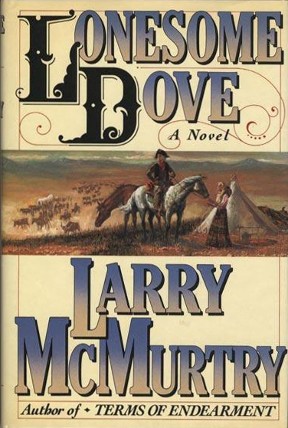
Lonesome Dove by Larry McMurtry


Pulitzer Prize-winning novel of epic proportions. Set in the American West towards the end of the nineteenth century. No other novel I've read has deeper or richer characters and plot, woven together with the eye of a master writer.
Violent, shocking, at times funny, poignant, sad and joyful. A triumph of a book. One of my all time favourite books of any genre. The TV miniseries is good too, but read the book first.
The other novels in the series, whilst still enjoyable reads, pale into insignificance against the original book, "Lonesome Dove". Don't be tempted to read the prequels first. Read "Lonesome Dove" and then, if you love the characters, which you probably will, read the sequel, "Streets of Laredo".


The Warlord Chronicles by Bernard Cornwell


The story of Arthur retold in gritty, action-packed realism. All the main characters are there. Merlin is magical, but it is never clear whether he real wields mystical powers or if he simply knows the ways of nature and the minds of men.
Native Britons defend their kingdom from the advance of the Sais (Saxons). Battles, betrayals, love and death.
Dark Ages Britain has never been so much fun to read.


The Saxon Stories by Bernard Cornwell


Bernard Cornwell again. This time a few centuries later and based firmly in historical fact. The story of Alfred of Wessex and the struggles against the Danes as told from the point of view of the larger than life character of Uthred of Bebbanburg.
Not quite as good as the Warlord Chronicles in my opinion, but great books nonetheless.


The Conqueror Series by Conn Iggulden

Conn Iggulden is firmly in the vein of Bernard Cornwell's action-packed storytelling, but focusing more on the actual historical figures rather than fictional characters involved in the events.
This, his second series of historical books, follows the rise of Genghis Khan and the Mongol nation. Gripping stuff.


The Emperor Series by Conn Iggulden


Conn Iggulden's first series follows the life of Julius Caesar. You may think you know all about the Emperor of Rome, but the story stretches over four books and never gets boring.
If you like Roman history, this series is a must.
Update: There is now a fifth book in the series - "Emperor: Blood of Gods". This tells the story of the bloody aftermath of Caesar's assassination.


Shieldwall by Justin Hill


I've only just read this book but think it deserves a place in this list. It is the first in a series leading up to the Battle of Hastings. Justin Hill's clever use of language that is directly derived from Old English and the meter of his prose that could so easily be imagined echoing in a great mead hall as part of a scop's epic saga, lends this page-turner a real sense of authenticity.
Strong characters, bloody battles and beautiful prose. What's not to like?


The Aubrey-Maturin Series by Patrick O'Brian


The absolute master of historical fiction. The best praise for this series is that it feels as if it could have been written in the early nineteenth century - the time the books are set. The attention to detail is incredible and the main characters, Jack Aubrey and Stephen Maturin, are so well formed that you feel you know them like members of your own family by the end of the series.
The writing can be hard going, especially to start with, but persevere and you'll be rewarded with twenty of the best historical fiction novels ever written.


The Troy Series by David Gemmell


David Gemmell is not best-known for historical fiction, he is much more famous for his fantasy writing, but this series, set around the battle of Troy is rich with historical details and Gemmel's usual flair for strong characters and exciting story lines.
Gemmell sadly died before finishing the last of the three books in the series and his wife, Stella Gemmell finished the book. The aptly named "The Fall of Kings" has an added poignancy as a result, but unfortunately suffers from a lack of consistency.


The Chronicles of Iona by Paula de Fougerolles


I have to admit that I haven't actually finished this one yet, but from what I have read so far, the writing evokes the time and place with aplomb. The characters of Columba and Aedan are robust and engaging and it is a story I know little about. It is set some eighty years before my own novel starts, so I was particularly interested to see how she deals with the location and the period.
So far I am not disappointed.


Legend by David Gemmell


OK, so this isn't really a historical novel. It is David Gemmell's first novel and set in his fantasy setting of Drenai. It tells the story of the siege of Dros Delnoch and introduces his wonderful character, Druss the Legend. Anyone who likes action-packed adventure, battles and great characters will love this book.
It is escapism at its best and one of my favourite books.