Sunday, 24 March 2013

Ten great historical fiction novels or series

Historical fiction is a massive genre with many sub-genres. There are different historical periods and approaches to books. Some writers take a real historical figure and write about their life. Others create purely fictional characters set in a historical setting. This is often used for historical romance novels. The time and place is fixed in history, but most of the characters and events are purely fictional.
Lots of novels that could be considered historical fiction are really a different genre, placed into a time in the past. An example of this would be Umberto Eco's, "The Name of the Rose". It is really a whodunit thriller, but happens to be set in a medieval monastery. The ambiance of the place and time work with the story and have a considerable impact on people's actions, but in essence, the story is about a detective catching a killer.
The novel I am working on is set in a real historical period (the first half of the seventh century) and includes several real historical characters and events, but the story is told mainly through the eyes of a fictional protagonist and other people who exist only in my imagination (and hopefully the imagination of those who read the book once it is published). This is a popular format used by many other historical fiction writers and allows the freedom to explore things outside the scope of known historical fact.
Here I have presented a list of ten great historical fiction novels or series of novels with a short description. They are in no particular order and I have not written a lengthy review of each book, as I am sure that anyone reading this can find a wealth of information and reviews using Google.
Click the book titles to find more information.


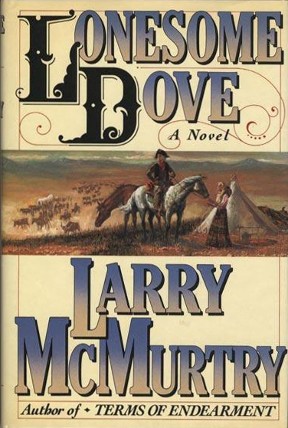
Lonesome Dove by Larry McMurtry


Pulitzer Prize-winning novel of epic proportions. Set in the American West towards the end of the nineteenth century. No other novel I've read has deeper or richer characters and plot, woven together with the eye of a master writer.
Violent, shocking, at times funny, poignant, sad and joyful. A triumph of a book. One of my all time favourite books of any genre. The TV miniseries is good too, but read the book first.
The other novels in the series, whilst still enjoyable reads, pale into insignificance against the original book, "Lonesome Dove". Don't be tempted to read the prequels first. Read "Lonesome Dove" and then, if you love the characters, which you probably will, read the sequel, "Streets of Laredo".


The Warlord Chronicles by Bernard Cornwell


The story of Arthur retold in gritty, action-packed realism. All the main characters are there. Merlin is magical, but it is never clear whether he real wields mystical powers or if he simply knows the ways of nature and the minds of men.
Native Britons defend their kingdom from the advance of the Sais (Saxons). Battles, betrayals, love and death.
Dark Ages Britain has never been so much fun to read.


The Saxon Stories by Bernard Cornwell


Bernard Cornwell again. This time a few centuries later and based firmly in historical fact. The story of Alfred of Wessex and the struggles against the Danes as told from the point of view of the larger than life character of Uthred of Bebbanburg.
Not quite as good as the Warlord Chronicles in my opinion, but great books nonetheless.


The Conqueror Series by Conn Iggulden

Conn Iggulden is firmly in the vein of Bernard Cornwell's action-packed storytelling, but focusing more on the actual historical figures rather than fictional characters involved in the events.
This, his second series of historical books, follows the rise of Genghis Khan and the Mongol nation. Gripping stuff.


The Emperor Series by Conn Iggulden


Conn Iggulden's first series follows the life of Julius Caesar. You may think you know all about the Emperor of Rome, but the story stretches over four books and never gets boring.
If you like Roman history, this series is a must.
Update: There is now a fifth book in the series - "Emperor: Blood of Gods". This tells the story of the bloody aftermath of Caesar's assassination.


Shieldwall by Justin Hill


I've only just read this book but think it deserves a place in this list. It is the first in a series leading up to the Battle of Hastings. Justin Hill's clever use of language that is directly derived from Old English and the meter of his prose that could so easily be imagined echoing in a great mead hall as part of a scop's epic saga, lends this page-turner a real sense of authenticity.
Strong characters, bloody battles and beautiful prose. What's not to like?


The Aubrey-Maturin Series by Patrick O'Brian


The absolute master of historical fiction. The best praise for this series is that it feels as if it could have been written in the early nineteenth century - the time the books are set. The attention to detail is incredible and the main characters, Jack Aubrey and Stephen Maturin, are so well formed that you feel you know them like members of your own family by the end of the series.
The writing can be hard going, especially to start with, but persevere and you'll be rewarded with twenty of the best historical fiction novels ever written.


The Troy Series by David Gemmell


David Gemmell is not best-known for historical fiction, he is much more famous for his fantasy writing, but this series, set around the battle of Troy is rich with historical details and Gemmel's usual flair for strong characters and exciting story lines.
Gemmell sadly died before finishing the last of the three books in the series and his wife, Stella Gemmell finished the book. The aptly named "The Fall of Kings" has an added poignancy as a result, but unfortunately suffers from a lack of consistency.


The Chronicles of Iona by Paula de Fougerolles


I have to admit that I haven't actually finished this one yet, but from what I have read so far, the writing evokes the time and place with aplomb. The characters of Columba and Aedan are robust and engaging and it is a story I know little about. It is set some eighty years before my own novel starts, so I was particularly interested to see how she deals with the location and the period.
So far I am not disappointed.


Legend by David Gemmell


OK, so this isn't really a historical novel. It is David Gemmell's first novel and set in his fantasy setting of Drenai. It tells the story of the siege of Dros Delnoch and introduces his wonderful character, Druss the Legend. Anyone who likes action-packed adventure, battles and great characters will love this book.
It is escapism at its best and one of my favourite books.

Friday, 15 March 2013

A glimpse of the muse

It has been over a month since I last posted on this blog and I thought I should write a quick update to prove that I haven't disappeared or given up on the book. I haven't. I have been focusing on the first draft and I'm still on track to meet my first deadline of getting it complete by the end of March.
I am now up to 89,700 words and the end is in sight. I am in the last chapter, or maybe there'll be one more. I'm not sure. Extra things keep happening in the story that I didn't know would take place, which is weird. It is like magic. The words come and events transpire in this fictional story that didn't exist before. It is hard to know if it is any good, but it is new, and it comes from nowhere.
The muse. Imagination. Whatever you call it, it is a strange feeling when characters do things you weren't expecting when you sat down to write that day. I know some writers map out every beat and every tiny scene in their stories before they write, but I am enjoying not knowing everything in advance.
So now, until I come back to report that I've finished the first draft, I'll leave you with a little excerpt from it. A glimpse of the muse at work.
"From between two of the charcoal mounds stepped a tall warrior. He walked with the relaxed confidence of one assured in his power. He was clad in leather and metal, his hair was dark and unkempt. He exuded strength and malevolence in equal measure.  
Strang stared at the man’s face. If he needed any further proof of what had happened and what was soon to pass, that face took any doubt from his mind. It was hard, with dark shadows veiling the eyes. And it was horribly disfigured. A raw, red, seeping scar ran from the man’s left eyebrow all the way down to his lightly-bearded chin. When he smiled, the scar seemed to smile too, pulling his face into a distorted mask. The other side of his face was undamaged, and he would probably once have been handsome. But he was now repulsive. His was a ghoulish face, like some monster stepping from the darkness of a mead hall tale into the light of day."

Sunday, 10 February 2013

Rugby: The Modern Shieldwall?

I've been quiet for the last couple of weeks, but I've kept busy with the writing. I've now written 79,495 words of the first draft and I have only got a couple of chapters left to write to get me to the finish line. So I'm  pretty much on track according to my plan. I'm getting quite excited now by the prospect of actually getting the draft complete and then starting to edit and clean it up a bit before the next stage.
I did my writing today just after watching England beat Ireland at rugby in the Six Nations and I couldn't help but wonder whether the men who today play professional rugby are similar in physique and temperament to the warriors who would have stood shield-to-shield in the shieldwalls of Dark Ages Britain.
They are strong and heavyset, seemingly oblivious to pain or intimidation, willing to throw themselves into the fray with little or no thought to their own well-being. They are purely driven by the goal to beat their opponents and to help their teammates.
Look at the scrums in rugby, with the mud, blood, screams, pushing, stamping and roars of exertion. It is not too difficult to imagine similar, if a lot more deadly scenes, over a thousand years ago as two war bands of opposing nations clashed in battle. They would have wielded seaxes, swords and spears. And they would have worn armour and borne shields of linden. But in essence there would have been two groups of savagely-competitive men vying over a small piece of muddy earth. Of course, there would be no physios for muscle strains and losing the game would mean death!

There is something almost gladiatorial about rugby, with the terraces of thousands of baying fans in Colosseum-like stadia, but if you removed the crowds and placed the men in a field somewhere, I think it would be reminiscent of those early battles of the past.

Sunday, 20 January 2013

Would fantasy have been the easy option?

I've been making great progress on the novel in the last couple of weeks. This week I went over the 70,000 word milestone that I had originally set myself as my end goal. Anything over that is novel length, or so I have read. So I feel as if I am really going to finish this book now, even though it is going to be quite a bit longer than 70,000 words (which is about 200 paperback pages).
Writing is a solitary pursuit and it is easy to lose self-belief. I find the best way is to set myself goals that I can hit in a short period of time. So I try to write at least 3,000 words a week, or at least 500 words in a sitting. That kind of thing. I do sometimes feel like I am more interested in how many words I've written than what I am writing, but that is not the case. It is the case though, that a novel is not written in a day. It is made up of many small sections of writing done at different times, just as a dry stone wall  is made up of many different stones. It is the writer's job to fashion each of these stones and then fit them all together so that the wall stands on its own.
I got a new laptop for Christmas and now take it everywhere, writing whenever I have a few minutes spare between all the other things I have to do as a father, husband, singer in a band and employee of a private company. All of these eat into my time, but it is amazing how much you can get done in the downtime with a bit of discipline and perseverance. I get some strange looks from other parents while waiting to pick up my kids from clubs. The mums and dads chat and watch their children, I sit in silence, computer on my lap and try to concentrate. I probably seem rude, or a bit of a recluse (definitely not my character at all), but I feel anxious if I do not make progress on my book when I have a whole hour to myself. It feels as if I am somehow cheating if I do not write.
After a few minutes I manage to transport myself once more into the world of my book. A world that is little-known to most people today, including me. The world of Britain some 1,400 years ago. The period known as the Dark Ages is, to most people, dark in terms of the amount they know about it. I fell into that category when I started writing my story. I knew next to nothing about the seventh century, but had a vague idea for a story based around documentaries I'd seen, or novels I'd read, with very little in the way of concrete historical fact.
As I've progressed, I've accumulated more knowledge. I've bought books and read information on different websites and blogs, but I am still no historian. Almost every time I sit down to write I come across another question. What trees grew and how many were there in Northumbria? Did common people know of the Romans who had left the island nearly two hundred years before? How common was the use of money? How exactly were slaves treated? The list goes on and on.
Some of the questions have answers that can be found, others are more difficult and depend on what you read. One thing is certain though, there will be people who will read my final book and find anachronisms in it. I will never be a historical expert, and there will be people who are real historians who know of things that I am not aware of and they will quickly see beyond my thin veneer of knowledge. I hope that they will be able to get past that and enjoy the book on its merits as a story based in an often-forgotten time.
However, from time to time I do think that it would have been an easier option to have created the story in a fantasy world. A pseudo Dark Ages Britain where nobody would be able to tell me I'd got it wrong. I could even have dragons and trolls marauding through the land, and not just in the tales told in the mead hall. But I am past that point now. I settled on the genre and now the book has taken on a life of its own. All I have to do is keep picking up the stones and working out how to place them in the wall. Some of the stones may not be historically accurate, but I hope they all fit together to tell a good story.

Sunday, 6 January 2013

Progress report and plan

I'm nearly 65,000 words in to the first draft. It's been a productive first week of 2013 but I still have a long way to go. I'd naively thought that the book would be about 70,000 words long (the minimum length of a novel), but I now realise that it will be longer than that. Probably somewhere around 100,000 words or a bit more. Of course, that all depends on how the story develops, and how many words it takes to write it!
Here is my tentative plan for the next few months:

  1. Complete the first draft by Easter.
  2. Put the draft on ice for a few weeks so that I can look at it with fresh eyes.
  3. Read through the draft and mark up areas that need extra work. I'm anticipating that there will be a few bits that are lacking detail (historic and otherwise), and a bit of restructuring will be required. I already know of a few sections where I have changed my mind and need to rewrite what happens to better serve the story.
  4. Add extra content and do the rewrites.
  5. Once the second draft is ready (not really sure how long that will take - part of me thinks it will take a long time - probably a few months), I plan to send the draft manuscript off to a few friends and family as test readers. With the draft I'll send a questionnaire for the test readers to fill in. The questionnaire will aim to pinpoint where readers were bored, or confused, which characters they liked or disliked, that sort of thing.
  6. Hopefully the test readers will return the questionnaires and I'll act on their comments by honing the manuscript into a third draft.
  7. At that stage, I'll find a professional editor to edit the manuscript.
  8. Do all the rewrites the editor asks for (or argue with the editor!).
  9. The final manuscript will then be ready. I'd like to think that could be sometime towards the end of 2013, or perhaps more realistically early 2014.
  10. Publish. I'll probably self-publish as an ebook, but that is a decision I'll need to take then. If I do self-publish, I'll need to work on other things like a website, formatting, a cover design etc. But that will be for another post in the future.
So, as you can see there are lots of things to occupy my time for the next year, but first thing's first - I'd better get that draft finished.

Sunday, 23 December 2012

Merry Geola

Midwinter is upon us. The winter solstice, or Geola, has been and gone and the days will begin to get longer soon, slowly but surely.
Geola is a dark time. A cold time. But a time for reflection and a time to spend with family and loved ones, looking forward to the time when the world will be warm again and life will spring from the land all around.
With the warmer months will come more back-breaking hard work in the fields. Perhaps enemies will attack. There may be plagues. What wyrd will bring, only the gods can know.
But for now, let us prepare a feast for Modranecht, mother's night, where those who follow the new Christ god celebrate his birth from a maiden! Those who still remember the old ways will honour their ancestral spirits, the Idisi.
But whichever gods you choose to follow, may you be safe, happy and warm this Giuli.

Sunday, 16 December 2012

A little bit of writing

I've made good progress this week. Up to 56, 800 words now of the first draft.
I've written a little about what inspired me to write the book, and a bit about the tools I use to do the writing. I think now is the time to show a small section of the writing.
It is from the first draft, so may well change substantially by the final edit, but it gives a pretty good idea of the type of book I'm writing. I hope you enjoy it.

Writing Sample

Oxa woke Beobrand the next day before dawn. Men were readying themselves all around them. Many were vomiting, leaving steaming puddles dotted throughout the encampment. Oxa handed him his spear and made sure he was holding his shield correctly. Oxa was wearing his full armour and in the dark he looked like a giant out of a bard’s tale.
“Here, take this.” Oxa handed Beobrand a seaxe. It was short, not much more than a knife, with a simple bone handle. “It doesn’t look like much, but it is a good blade and holds its edge well. Once we are in close, you will find it more use than the spear. Your brother gave it to me and it served me well. He would have wanted you to have it.”
Beobrand thanked him and they walked together towards the edge of the camp that was closest to the enemy. This is where the shield wall was forming and Edwin had taken Oxa’s advice and set up camp to the east of Cadwallon’s and Penda’s armies so that when they attacked the sun would be in the eyes of the Mercians and Welsh.
As they neared the centre of the line, Beobrand saw that Edwin and Osfrid were standing there, with their most trusted thanes around them. They parted and allowed Oxa and Beobrand to take up places in their ranks. Oxa could sense that Beobrand was finding it difficult to control his excitement so he turned to him and said in a calm voice, “Easy now, Beobrand. This is your first battle and you will not be wanting to die in it, so listen to me.” Oxa took off his helmet and Beobrand could just make out the scar running down his face from his left eye to his upper lip. “Use what I have shown you. If you stick by me, you’ll be all right. And remember, if I get one of their shields down, get in quick and skewer the bastard.”
Beobrand nodded and turned his attention towards their enemies, who had seen that Edwin’s Northumbrians were readying for battle and were forming their own shield wall. They were standing in a ragged line at the top of a small rise, the sky behind them a dark purple. The land in between was flat and boggy. To the centre of the enemy line Beobrand made out a standard bearing a wolf’s head and several wolves’ tails. To the left of that he saw another banner, this one carried a human skull and a crossbeam from which dangled what appeared to be human scalps. The men below those standards were lifting up spears, and strapping on shields. Preparing for battle. Preparing to kill. Smoke billowed from their campfires behind them, mingling with the ground fog.
Beobrand wondered if one of the men he could see in the dim pre-dawn light would kill him soon. Or perhaps he would kill some of them. He felt sick all of a sudden and started breathing through his mouth in an effort to calm his stomach. He closed his eyes and leant his head against the ash haft of his spear. Images from the last six months flooded his mind. His mother, shaking with fever, lying on the straw-stuffed mattress, soaked in sweat. His father, sobbing quietly from the corner of the hut. The sound of merriment from outside as the villagers celebrated Beltain. Then the horrific image of his father, spittle and vomit dried around his mouth, his dead hand still clutching the handful of druid’s cap mushrooms, the summer sun dappling his pain-stricken face.
“Wake up, boy!” Oxa’s gruff voice brought Beobrand back to the present. Back to the battle where he would either kill or be killed. He was no longer a farmboy, he was a warrior in Edwin of Northumbria’s army and for the first time since his parents’ deaths he felt he belonged. He opened his eyes and realised that the time had come. The sun was just beginning to peak out over the trees, shedding a pale light over the battlefield and casting long shadows in front of the Northumbrian warriors.
“Come, my countrymen!” shouted Edwin. “Let us send these pagans to hell where they belong. Kill them all! Attack them now and kill every one of them!”
“For Edwin!” came back the raucous response from the army, Beobrand’s voice as loud as the next man’s.
The shield wall surged forward. Beobrand felt his shield bang against the thane on his left as they ran and he tried to keep pace and his shield in the right position. I can’t believe I’m here, he thought. And then there was no more time for thinking. The men around him let fly their javelins with shouts of defiance. At the same time, the enemy threw theirs. Beobrand had no javelin but he watched as the light throwing spears were silhouetted against the sky, those of each side mingling together at the apex of their flights, and then he could see the burnished point of one spear glinting as it fell straight towards him.
Beobrand raised his shield above his head and kept running. He felt something hit the rim of the shield, but he was not wounded. The man to his left suddenly screamed, tripped and fell. Beobrand caught a glimpse of a javelin piercing the man’s right leg just above the knee. Beobrand looked away just in time to see that the enemy were mere steps away.
The two shield lines crashed together like waves hitting a cliff. Beobrand felt his shield smash against another. He pulled back, trying to get an opening at the warrior in front of him. As he did so, he realised it was a mistake. His opponent, a brutish, red-bearded Welshman, wearing a leather helm, pushed hard as he stepped back, causing Beobrand to lose his balance and fall sprawling to the muddy ground. The Welshman, smiling at how easily he had broken through the shield wall, pulled back his spear for the killing blow. Beobrand tried to scramble up, but the Weshman moved in too quickly for him to get to his feet. But just as the spear point came hurtling towards Beobrand’s exposed chest, Oxa turned and parried the blow with an over arm swing of his barbed spear. He swung with such force that the warrior lost his grip. The spear fell harmlessly to the ground next to Beobrand.
With practised skill and uncanny agility, Oxa pulled back his spear and, as their adversary feinted to draw his langseaxe, Oxa thrust his spear into the Welshman’s wooden shield. The barbs caught, and Oxa leant on the spear shaft, using his weight to pull the shield down.
“Now, boy!” Oxa shouted, struggling to hold on to his spear and avoid the cleaver-like langseaxe the Welshman had unsheathed. Beobrand scrambled to his feet, snatched up his spear and, letting out a roar that was lost in the tumult of battle, thrust his spear at the Welshman’s midriff. The man attempted to parry, but was hampered by his trapped shield and only succeeded in deflecting the spear upwards towards his unprotected face. With all Beobrand’s weight behind the thrust the point grazed over the man’s right cheekbone and pierced his eye. He collapsed instantly and the sudden deadweight on his spear pulled Beobrand down. He stumbled, landing in a heap on the warrior’s twitching corpse.
The anvil sound of metal on metal and the screams and grunts of the warriors surrounded him. He struggled to pull his spear from the eye socket of the warrior, but it was lodged fast. He pulled for a few heartbeats and then remembered the seaxe that Oxa had given him. He unsheathed it and with abandon, he threw himself into the rift in the shield wall. He had killed an enemy and all his fear had vanished like morning dew in the light of the sun. The noise of battle subsided around him and an inner calm washed over him.
A snaggle-toothed man with blood-shot eyes, peaked over a shield in front of Beobrand. Beobrand’s seaxe flicked out over the shield and rammed down the man’s throat. Oxa was screaming beside Beobrand, hacking and slashing with his sword, splinters from the enemies’ shields making a dusty cloud about him. The Northumbrian line was moving forward. A fallen warrior clawed at Beobrand’s leg, whether friend or foe, Beobrand neither knew nor cared. Battle lust was upon him and he had no time for the wounded. He stamped on the man’s fingers, feeling them snap under his foot and pushed his shield forward to meet the next enemy.
The enemy shield wall seemed to part and a grey-haired man wearing a fine suit of scale mail stood before him. He was wielding a blood-drenched sword and there was a pile of corpses at his feet. Beobrand didn’t think of the danger, he simply saw a gap in the line and walked forward to fill it. The old warrior looked surprised and slightly saddened as the young man, with no armour and only a splintered shield and short seaxe to protect himself, moved towards him to die. Something in the warrior’s grim face penetrated through the red mist that had descended on Beobrand and he looked around to see where Oxa and the other Northumbrians were, searching for aid against this mighty warrior. The moment of lucidity came too late however, and he saw that he had become completely cut off from his shield wall. The tide of the battle had shifted and he could now see that the Mercians and Welsh had managed to outflank the Northumbrians, who had fallen back towards their encampment, leaving Beobrand stranded and surrounded by enemies.
End of the Sample