
How do you write a battle scene which engages your readers and drives the story on?
It’s a question many authors of historical fiction fight with. Read my tips and advice in this Historia article.


 The Last Berserker: An action-packed Viking adventure by Angus Donald
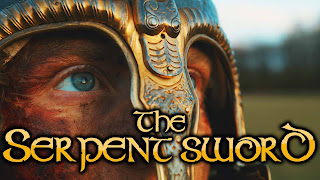
It has been quite a while since I have posted any author interviews, so I thought it was about time that I resurrected the format. It is with great pleasure that I welcome to the blog, author, screenwriter, playwright and fellow producer on The Serpent Sword TV series, Gregory (Greg) Stewart.

You have written screenplays, plays and novels. Which do you consider your true calling, or do you just think writing is writing? What do you most like and dislike about each art form?
I started out thinking I would write novels only. That was
my childhood ambition. And yet I had a late start after spending most of my
twenties going in a different direction and trying to get into the music biz.
Around the time I finished my first novel (which wasn’t any good), a friend
came to me with an idea for a film. I love film and thought why not try that
too. So, while I was writing my first novels – essentially learning how to
write fiction properly – I was also writing screenplays and learning how to do
that as well. Writing for TV was a natural progression from film. I only wrote
my first play last year, so that’s been more of a recent challenge. So yes, for
me it’s all became part of one calling, to write. But fiction and film/TV are quite
different disciplines and even though they share some common ground, I always saw
them as separate ambitions.
In terms of what I like and dislike – for fiction, my
favourite part is planning the story then later seeing or feeling the
characters come to life as you work through the draft. The writing part can be
the hardest, because of the time it takes and there’s always going to be a point
where you feel lost, or that it’s not working. When you have a first draft
there’s a certain euphoria, and as you read it it's fantastic to find the parts
that come together, but also disheartening when other parts don’t work to the
extent that there are going to be big rewrites. For screenwriting, the story
part is trickier, because there are so many more limits, but once the story is
locked in, the process is faster, and I don’t dislike any part of it. After
writing fiction, screenwriting often seems like a bit of a break. My favourite
part of screenwriting is the dialogue. I love trying to find the most interesting
and effective words for the characters to deliver.

Your newest novel is called Astatara. Please tell us a bit about it.
Astatara has a classic fantasy set-up - two teenage children fall into a mysterious orb of light and find themselves trapped in an unknown and hostile world. Gradually they discover a strange culture with a terrifying prophecy and some very nasty villains. Yet as they work through this, trying to understand where they are and how they might get back home, the story also follows a man who in our world, is trying to unravel the mystery of the orb. This journey becomes a terrible obsession for him with dreadful consequences for lots of people around him. Eventually, the two stories connect, and the mystery of the orb is finally revealed. On the one hand it’s hopefully an exciting and gripping fantasy adventure – I had in mind a lot of Victorian era adventure stories by writers, such as Jules Verne or Conan Doyle – but on the other hand it’s also a darker story about obsession, rivalry, Communist Russia, familial disintegration and reunion. The scope of it is quite ambitious! Whether, I’ve completely succeeded or not, I don’t know.

Astatara is a standalone book. Wolf Head and its sequel, The
Strange Case of Sarah Wynter are part of the Trasis series. A novella, FerrisWheel is also part of that series as a side story. I have outlines that take me
up to book six and expect there’ll be a seventh after that. I have another
series on the starting blocks – The Devil’s Fairytale – which will be five
books. Most of that series is already written and I’m planning to publish the
first two of those books later this year.
Your novels don’t seem to conform to genres. Is that a
conscious decision?
Everything needs a label! Yes, its tricky for me to write in
clear cut genres. It’s definitely all speculative fiction – fantasy, horror,
sci fi – but there’s often some crime element to it as well. And I love
exploring history so if I can coincide the story with some past event that’s
always an attraction. If labels are needed – and I know they are – then I would
say both the Trasis and the Devil’s Fairytale series are fantasy horror.
Astatara is sci fi fantasy. Red Bunker – my giveaway novella for subscribers –
is sci fi horror.

What are you working on at the moment?
The Strange Case of Sarah Wynter is due to be published on 5th
March, so I’m doing final edits on that. Then obviously, there’s all the work
ongoing for The Serpent Sword adaptation too and hopefully we’ll be pitching
that to some power players soon. I’ve got another TV project that I’m in the
process of finding somebody to partner up with, and a film project that I’m
working on with an actor and producer which we’re hoping to get some
development funding for. Soon I’ll have to start planning the first Devil’s
Fairytale release and perhaps start work on the next Trasis novel – which is
going to be called The Vampire States of America.
What are your ambitions for your writing? What would
signify success for you?
The self-publishing is only just getting off the ground.
I’ve had some success with Wolf Head which has gone down well with readers,
which is very encouraging. But I need to build on that now. Try to get my head
above that parapet. There are so many writers out there and it’s a longer game
that I’ll have to keep working on. Ideally, I’d like to get picked up by a publisher.
For the film and TV work, it would be getting something on
screen. I’ve had some false starts – a feature film I wrote in 2017 is stuck in
the final stages of post-production due to money problems and another feature I
was commissioned to write in 2018 was cancelled just a few weeks before
filming. That’s quite hard to take when you put a lot into something that
should have significantly raised your profile. But it’s not uncommon in the
industry, so I can only hope I’ve paid my dues and that The Serpent Sword will
be the one to get out of the gate.
What writers, books and movies have had the biggest
influence on your work?
Growing up it was a lot of fantasy. Tolkien, CS Lewis, The
Belgariad by David Eddings, the Dragonlance books, Gemmell, Moorcock –
particularly Elric. Later, Stephen King became quite an influence, particularly
The Stand. Also, Tad Williams' Otherland series had a huge impact. It’s such a
great mash-up of sci-fi, fantasy, crime etc. Mary Shelley’s Frankenstein was
also a key book for me, and Victor Hugo’s Les Miserables. The scope and power
of that story is astonishing. Later again it was Paul Auster, Cormac McCarthy –
The Road particularly I think is one of the best novels ever written – and James
Ellroy. More recently I’ve become obsessed with William Trevor. I think his
books are perfect.

With films, I’ve seen so many that it’s difficult to
separate the influences from the escapism. In terms of early film experiences
that jolted me, it was the original Star Wars trilogy, Jaws and Alien. Beyond
that it’s an eclectic mix. I always loved the Hammer horror films and lots of
Hitchcock, Rear Window particularly. American Werewolf. The Good the Bad and
the Ugly. And perhaps less obviously, Olivier’s Richard III. But I suppose if
there was one that changed the way I looked at film it was Taxi Driver. I think
I was 21 when I saw it on VHS on a small TV in my bedroom, but it was such an
intense experience and it made me aware of screenwriting and directing and
acting combining to create this art form in a way that I’d never grasped
before.

What are the best and worst things about being a writer?
The creative side is all good, really. Storytelling is so
much fun and then having people enjoy and appreciate what you do is unbeatable.
The worst part is how difficult it is to break through.
What is the best book you've read in the last twelve
months?
Probably a tie between William Trevor’s Fools of Fortune and The Haunting of Hill House by Shirley Jackson. As I said before, I think William Trevor’s books are flawless. Fools of Fortune is a about a family caught up in the Irish war of independence and tells how that affects them and how they come to terms with it in later years. Hill House was a book which I felt I’d read before because it’s been adapted for the screen so many times, but I hadn’t, and it’s a great psychological horror. Jackson really gets into the splintering mindset of the lead character. Such elegant and effective writing. I’ll definitely be reading more of her books.
What is the best film or TV you've seen in the last
twelve months?
In between lockdowns I managed to go and see Mank at a local
cinema, which I thought was great. I love that kind of filmmaking, such precision,
detail and nuance. On TV I’ve started watching Steve McQueen’s Small Axe film series
and thought ‘Education’ was terrific. Also, I love Better Call Saul and that
most recent series was electric. I also very much enjoyed the second season of
the Mandolorian.

And now for the quick-fire questions:
Tea or coffee?
Herbal tea or water please.
Burger or hot dog?
Pizza.
Villain or hero?
Every good story needs both.
Beer or wine?
Wine at home. Beer when out.
Movie or TV series?
Movie usually.
Happy ending or tragedy?
I seem to write happy endings for my novels and tragic ones
for my screenplays.
In the car, audio book or music?
Audio book. Currently listening to The Lord of the Rings.
Thanks so much for answering my questions, Greg. Good luck with all the projects (especially The Serpent Sword!). ;-)
Connect with Greg at:


It's been a long time since I have invited an author onto the blog for a guest post. But I love guests and it is with great pleasure that I welcome Paul Bennett on today to tell us all about his series of novels, The Mallory Saga, set during The French and Indian War and its aftermath, and the Revolutionary War.
Having dabbled in writing and poetry over the years, Paul had harboured the desire to write the next great American novel, but life got in the way until 2013 when he started writing book reviews, and communicating with authors about the process of writing a novel. His dream returned, and the fruit of his labours became the Mallory Saga novels.

So, over to Paul to tell us about the inspiration and the history behind the books.
The inspiration to write was, in the beginning, merely to see if I could do it. I had written short pieces over the years but to tackle a full blown novel was a daunting prospect. Once the seed was planted I came up with a rough idea of telling the story of three siblings living somewhere in colonial America. Choosing that general locale was a natural fit for me as I’ve been a lifelong student of American history and I felt that if I was going to write a historical fiction novel, it might be prudent to choose a subject I knew a little about. I picked The French and Indian War as the starting point for what was now becoming a possible series of books that would follow the Mallory clan through the years. That war intrigued me and I saw a chance to tell the story through the eyes of the Mallory family. It also provided me with the opportunity to tell the plight of the Native Americans caught up in this conflict. The French and Indian War paved the way for the colonies to push further west into the Ohio River area. It also set the stage for the events of the 1770’s. Britain incurred a huge debt winning that war and looked to the colonies for reimbursement in the form of new taxes and tariffs. Well, we all know how those ungrateful colonists responded.
As to the name Mallory – I have a photo hanging on my living room wall of my great grandfather, Harry Mallory. I got to know him when I was a young boy and was always glad when we visited him. He lived a good portion of his life in western Pennsylvania which is where much of Clash of Empires takes place. So, as a gesture to my forebears, Mallory became the name of the family.


In Paths to Freedom the children of the three Mallory siblings begin to make their presence known, especially Thomas, the oldest child of Liza and Henry Clarke (see right there, already another family line to follow), but Jack and Caleb, the twin sons of Liam and Rebecca along with Bowie, the son of Daniel and Deborah are beginning to get involved as well. The French and Indian War, the historical setting for book 1, was over, and the Mallory/Clarke clan is looking forward to settling and expanding their trading post village, Mallory Town, now that the frontier is at peace. And for a time they had peace, but the increasing discontent in the East, not so much toward the increasing rise in taxes, but the fact that Parliament was making these decisions without any input from the colonies, slowly made its way west to the frontier. Once again the Mallory/Clarke clan would be embroiled in another conflict.
Another facet of my saga is that the main characters are not always together in the same place or even the same event. In Paths my characters are spread out; some have gone East, some have gone West, some are sticking close to Mallory Town, so in effect there are three stories being told, and that means more plots, subplots, twists and surprises.
One of the aspects of the lead up to The Revolutionary War was the attempt by the British to ensure cooperation with the Native Americans, especially the Iroquois Confederation. The British had proclaimed that they would keep the colonies from encroaching on tribal lands, a strong inducement indeed. However, some tribes, like The Oneida, had established a good relationship with the colonists. I knew right away when I started book 2 that the relationship between the Mallory’s and the tribes would be part of it. Among the historical Native Americans who take part in Paths are the Shawnee Chiefs; Catecahassa (Black Hoof), Hokoleskwa (Cornstalk), Pucksinwah (father of Tecumseh), and the Mingo leader Soyechtowa (Logan).
I also realized that I needed to get someone to Boston, and the Sons of Liberty. Thomas Clarke, the eighteen year old son of Liza and Henry, was the perfect choice for the assignment (mainly because he was the only child old enough at the time). Through him we meet the luminaries of the Boston contingent of rebels, Paul Revere, Dr. Joseph Warren, John Hancock, and the firebrand of the bunch, Sam Adams. Plenty of history fodder to be had…British raid in Salem…Tea Party…the famous midnight rides…culminating with the Battle of Lexington and Concord. Oh yes, plenty of opportunities for Thomas.

An untenable situation arises in Mallory Town resulting in Liam and his two companions, Wahta and Mulhern, finding themselves on a journey to the shores of Lake Michigan and beyond. Driven by his restless buffalo spirit, Liam has his share of adventures; encountering a duplicitous British commander, meeting many new native tribes, some friendly, some not so much. A spiritual journey in a land not seen by many white men.
I ended Paths with the Battle of Lexington and Concord, the first shots of The Revolutionary War. The flint has been struck; the tinder has taken the spark. Soon the flames of war will engulf the land, and the Mallory clan will feel the heat in the third book, Crucible of Rebellion.

The timeline for Crucible is 1775 – 1778. I decided to split the Revolutionary War into two books, mainly because there is so much more action as opposed to The French & Indian War…and because as I was writing, my characters insisted on some scenes I hadn’t previously thought of. 😀Book 4 of the saga is in the planning stages. Tentative title – A Nation Born.
The three Mallory siblings, Daniel, Liza, and Liam play important parts in Crucible of Rebellion, but it is their children who begin to make their marks on the saga. Their youngest son, Ethan, and their daughter Abigail, of Daniel and Deborah travel with their parents to Boonesborough, and reside there with Daniel Boone. The war reaches even this remote frontier, prompting Daniel and Deborah to move further west in search of peace. However, the banks of The Wabash River prove not to be immune to conflict.
Their eldest son, Bo accompanies Liam’s twins, Jack and Cal, first to Fort Ticonderoga, then to Boston with a load of cannon for General Washington’s siege of Boston (the Noble Train of Artillery with Colonel/General Henry Knox). In Boston they meet up with Liza and Henry’s son Thomas, who is no longer a prisoner (can’t say more than that), Marguerite, and Samuel Webb.
General Washington has plans for the Mallory boys…plans which see some of them in a few of the more important battles of the war… the escape from Long Island, the surprise attack at Trenton, the turning point battles at Saratoga NY, as well as taking part in numerous guerrilla type skirmishes.
A long ways away from the conflict Liam, with Wahta, are living with the Crow along the Bighorn River. Liza and Henry made the trip to Boonesborough with Daniel and Deborah, but do not go with them to The Wabash….they have their own adventures.

Although I write fiction tales, the historical aspect of the saga provides the backdrop. History is often overlooked, or is taught with a certain amount of nationalistic pride, whitewashing controversial events, much to the detriment of humankind. So I hope that what I write might help broaden the reader’s horizon a bit, that what they learned in school isn’t necessarily the whole story. Two main historical topics in the story of America that frequent The Mallory Saga are slavery, and the plight of the indigenous people who have lived here since before the founding of Rome; two historical topics that linger still in America’s story. Entertainment and elucidation; lofty goals for a humble scribe telling a tale.
 Fugitive by Paul Fraser Collard